Weaver Gowy Catchment
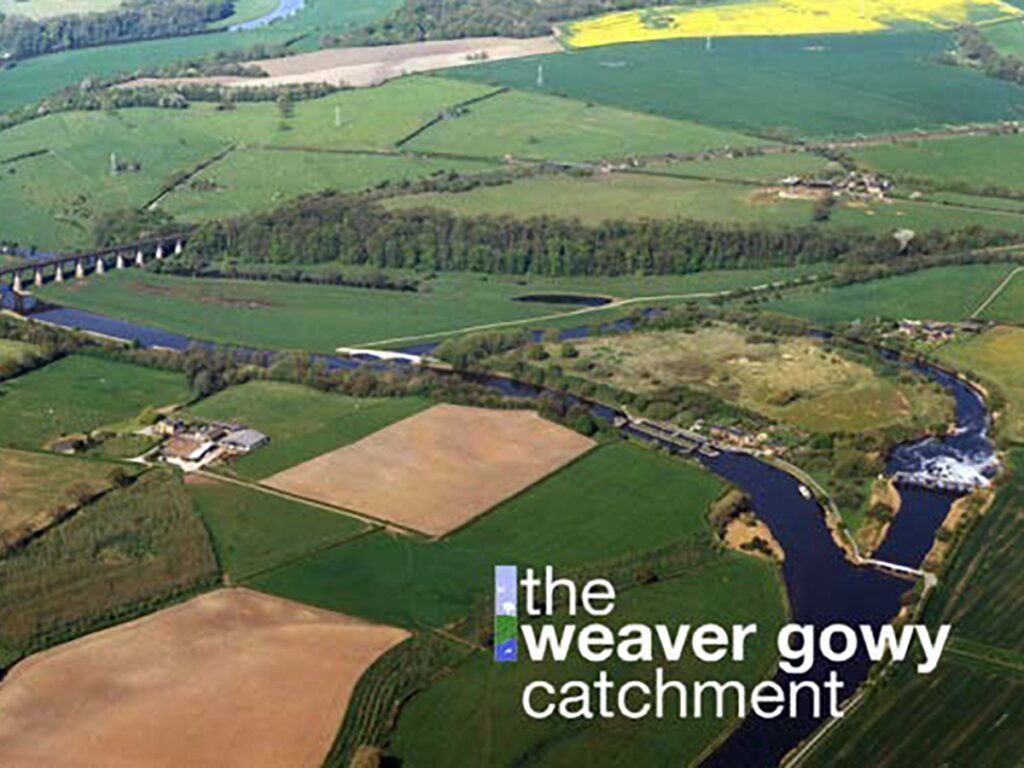
The Weaver Gowy catchment is part of the North West River Basin District and is characterised by low-lying rolling countryside and beautiful plains. However, some parts are heavily industrialised.
The River Weaver flows through dairy farmed areas of Cheshire, through Nantwich and onto Winsford where it becomes impounded and navigable, joining the Manchester Ship Canal at
Runcorn. The operational catchments are the Dane, Gowy, Lower and Upper Weaver.
The Gowy runs to the east of Chester and meets the Mersey Estuary near the oil refinery at Stanlow. This catchment is largely rural (dairy & beef farming) and includes core industrial locations with regulated and non-regulated water pollution issues in areas of industrial legacy. The area has numerous Sites of Biological Importance and Sites of Special Scientific Interest (SSSI). The Cheshire Meres and Mosses form part of the internationally important West Midlands Meres and Mosses, which include sites designated as SSSI, SAC and Ramsar. Otters have become established and the Lesser Silver Water Beetle, a protected species, is found in several parts of this catchment. The native White Clawed Crayfish is found in several watercourses in the catchment.
The catchment is popular with anglers as the Rivers Gowy and Weaver both support good coarse fish populations; this catchment also supports our largest eel populations. Rural land use and agriculture is a major feature of the Weaver Gowy catchment and agricultural and septic tank pollution are common problems.
Industry is concentrated around the lower catchment near Runcorn an area particularly known for its chemical industry and Ellesmere Port. The catchment is also known for its salt mines which supply salt for industrial use and for road gritting. In parts, the aquatic ecology suffers from current and past industrial discharges compounded by river modifications including weirs and locks that act as barriers to fish migration. The top three issues which need addressing under the Water Framework Directive in this catchment are pollution from rural areas, waste water and physical modifications.
Our Vision and Objectives for the Weaver Gowy Catchment.
“All water bodies of the Weaver Gowy catchment to be clean and
healthy, supporting measurably diverse wildlife, valued by
people and enabling sustainable economic growth.”
This Plan is about action. Action to improve our rivers, and action to raise awareness and educate people about the importance of rivers in line with the following 5 core Objectives:
1: Developing a Robust Evidence Base:
We will collectively decide where and what the issues are based on the evidence available. This will enable us to identify, prioritise and address the needs of the Catchment. We will all commit to making available to this Catchment Partnership data, maps and evidence which help us to identify and deliver on the following objectives.
2: Improving Water Quality:
In line with the priorities of the Water Framework Directive to prevent the deterioration of waterbodies, move them towards good ecological status and reduce point source and urban/rural diffuse pollution. Take action towards meeting EU Water Framework Directive by 2027 and other regulatory drivers, including the revised Bathing Water Directive.
3: Managing Water Quantity:
Protect the people and wildlife that depend on the river from the influences of climate change, both floods and droughts. As a Catchment Partnership we will integrate water quality, flood risk management and habitat creation when considering interventions.
4: Engaging with Business and Communities:
Manage the river from source to sea to maximise the benefits that it brings to our economy and communities. In connecting people with their natural environment we have a priority focus on
education, improving health and wellbeing, supporting communities at risk from flooding and
engaging local business to use and manage water in line with Environment Agency legislation.
5: Enhancing and promoting the Natural Aspects of the Catchment.
Protecting species, improving habitats and measurably diverse biodiversity, controlling the spread of Invasive Non Native Species (INNS) in ways that are able to be managed and sustained into the future.
Catchment Partnership Management Plan:
The partnership has developed a joint action plan to deliver improvements to water quality in the catchment.