
Grow, Cook Eat Grant transforms outdoor space for local students
Wrenn School, a secondary school in Wellingborough, was awarded a grant of £3,000 from Groundwork Northamptonshire’s Grow Cook Eat initiative to create a sensory garden for students.
We spoke to project lead Sarah Earl, about the impact the funding has had on young carers, students and staff, and how the garden is supporting wellbeing across the whole school community.
A space for wellbeing
At Wrenn School, we wanted to create a sensory garden – a space which stimulates the physical senses, improves and develops physical, emotional and mental health, and offers therapeutic value. We wanted to encourage children to explore and enjoy the natural environment as a direct contrast to the world of technology that they are immersed in daily.
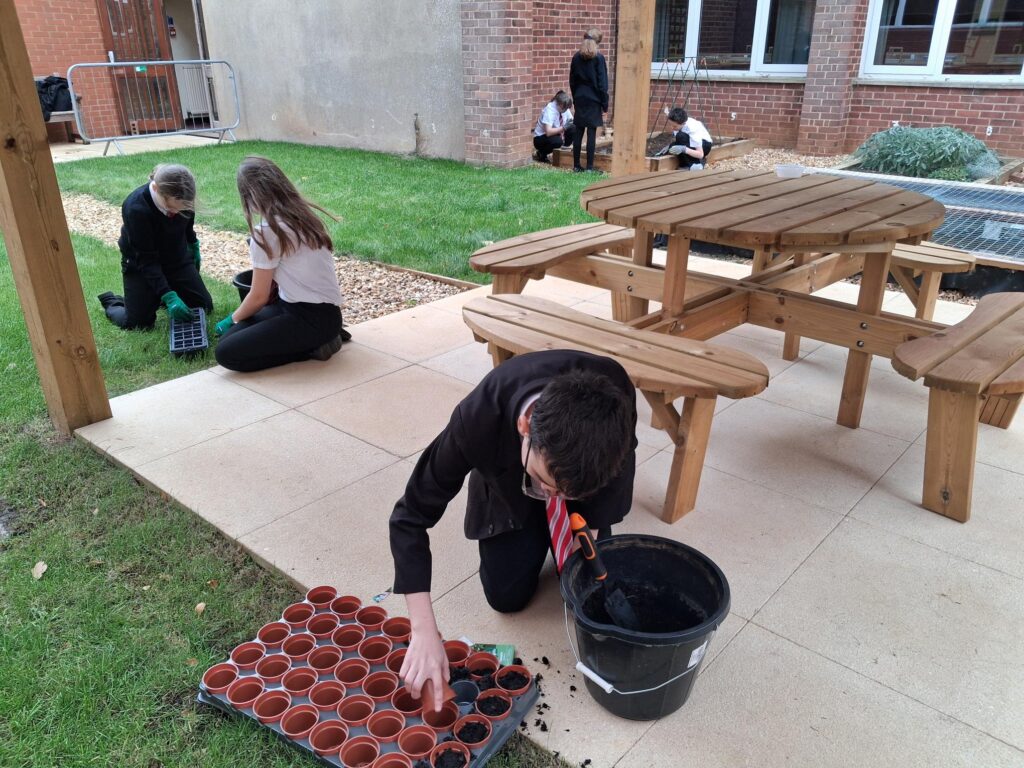
With a clear environmental and sustainability focus, I had already set up a young carers group within school and we had developed an allotment on one of our sites. However, as we operate on two sites, the young carers and our Duke of Edinburgh students wanted to develop a sensory garden on the other site which they could manage and look after.
When we heard about the possibility of grant funding from Groundwork Northamptonshire, we thought there was an exciting opportunity to bring our vision to life.
Transforming an unused space
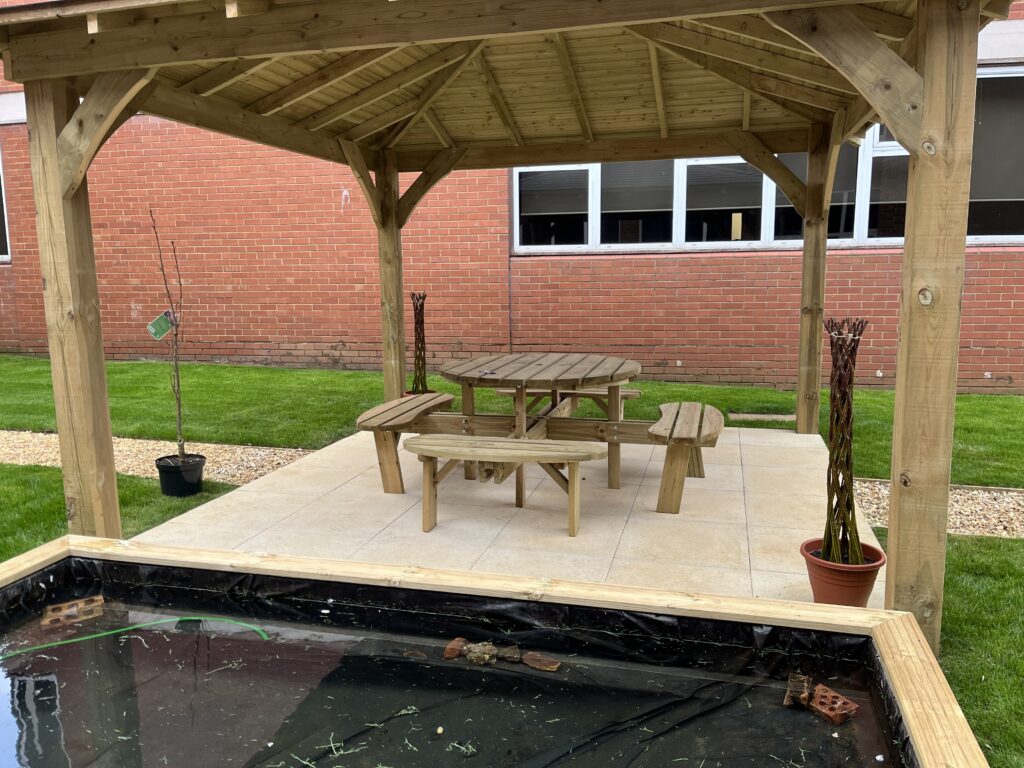
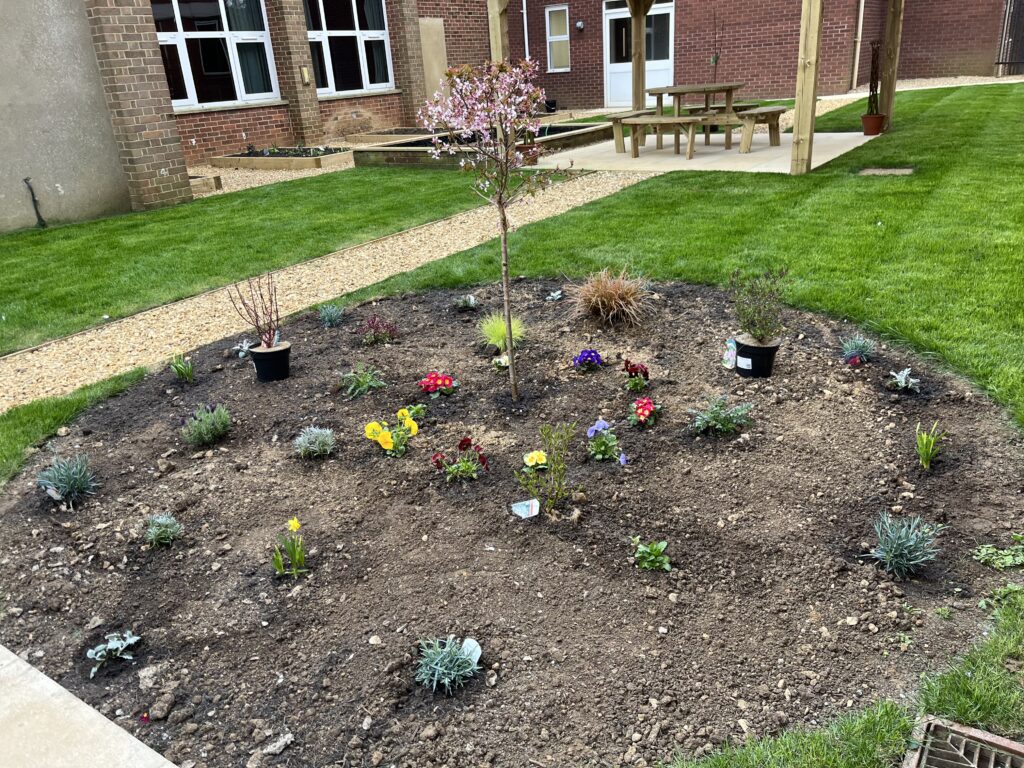
We were delighted to be awarded £3,000 of funding and immediately set about transforming a courtyard area. The space was refurbished to include raised beds for growing, a seating area, a pagoda and a pond.
We bought new tools and materials to enable the development of the space as an educational facility for students, with the focus on growing vegetables, fruits, herbs and edible flowers. The raised beds were complemented with potting benches, a composting area and rainwater collection from the pagoda to facilitate sustainable watering of crops. We also purchased cloches, additional planters, a variety of hand tools, educational gardening books, compost, and fruit trees, bushes, plug plants and seeds.
Our experience has shown that creating a school garden, as an alternative place of learning, can greatly support our school as a calming, educational space which students can own and take pride in. Having this space teaches and enriches children and young people with key life skills which will benefit them in every way possible as they develop.
More than just a garden
The grant has allowed our young carers and staff to enjoy the sensory garden in so many ways. It has helped support mental health and wellbeing, and we have introduced a book club that uses the space. We have also started collaborating with the food department, to use the produce we grow in cooking lessons.
Some of our students are now designing a memorial to sit within the garden, which is a really meaningful project that has given them a sense of purpose and ownership.
The whole school has benefitted from this project and I have been surprised how much the students love the space. They are connecting with green spaces and seeing how fresh produce is grown. They are working together and talking with each other on a common project, which has helped foster inclusivity and reduce social isolation. They are learning about the benefits of each crop and the food department has come in to talk to students about nutrition, which is encouraging them to make healthier lifestyle choices. And we have introduced cooking classes so students can expand their confidence and skills in the kitchen.
Looking to the future
The success of the sensory garden has inspired us to think even bigger about how we can connect our students with nature and outdoor learning. So, off the back of designing this garden and the positive impact it has had on our students, we are now looking into becoming a forest school.
I am so grateful for this funding and couldn’t have done it without Grow Cook Eat. To see students light up when they go into this space is just amazing and I feel so proud to be able to give this to them. A place they have created and they feel is theirs.