
Katie: Green Schools Revolution Project Manager at SOS-UK
Career progression: Following her placement, Katie was offered a permanent position at SOS-UK as Green Schools Revolution Project Manager, where she now oversees initiatives around rewilding and student-led climate education in schools.
New to Nature provided Katie, 24, with the opportunity to transition into the environmental sector and build upon her background in rewilding and education. Following the success of her placement, Katie has secured further employment at SOS-UK as a Project Manager, where she now leads initiatives combining her passion for sustainability, conservation and education.
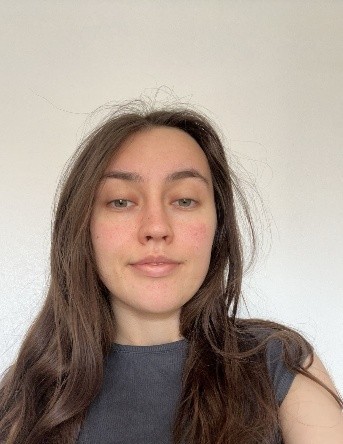
After graduating with a degree in Physical Geography, Katie worked in a secondary school with disadvantaged young people while actively seeking paid opportunities in the environmental sector. Despite her best efforts, she found it difficult to access suitable roles –until she discovered New to Nature, a 12-month paid placement programme supporting young people from underrepresented backgrounds.
Being the Green Schools Revolution Project Assistant at SOS-UK brought together Katie’s passions for education and the environment.
During her placement, Katie worked on the “Wilding Schools” project, which aimed at transforming 30% of UK school grounds into nature-friendly spaces by 2030. Working in areas of high deprivation, as in her previous pastoral role, gave Katie both a real appreciation and understanding of what it means for these schools to have wider experiences and chances to be involved in projects. This role not only aligned with her values but also helped her develop key skills in project management, communication, insight and evaluation.
Thanks to the sector-relevant skills and experience gained through her placement, Katie was offered a permanent position at SOS-UK as Green Schools Revolution Project Manager, where she now oversees initiatives around rewilding and student-led climate education in schools. As part of this, Katie line manages two members of staff.
Her understanding and opinion of green jobs has also shifted. Before, Katie thought the roles primarily focused on conservation. Now she understands that a green job can also include project management, education, and more – there isn’t necessarily one set pathway.
Katie said:
“I was just getting so many rejections. My emails were just full of ‘not enough experience’. Even when I’d got through to interview and when I’d asked for feedback, it was generally that the other person had more experience. Sometimes the roles that I was looking at, were very much like, oh, I need this certain degree or qualification.
“When I saw all these New to Nature roles came out, they were focused on project management across loads of different organisations, so I think for me, that opened my eyes to a new area of environmental jobs. At school we didn’t really discuss green jobs. When I first started thinking about green jobs, it was very much renewables and engineering, that’s what I always imagined in my head.
“Looking back, I think my role was probably the best suited, because it aligned a lot with the youth experience that I had from working in school, and also when I was at university, getting young people involved in conservation and environmental subjects.
“My favourite thing about running Teach the Teacher is listening to all of their ideas because I only have so many, but every single time I’ve ever run one of those workshops, I’ll hear a new idea for how climate education be taught in every single subject.
Reflecting on her journey, Katie hopes future employers adopt more inclusive hiring practices inspired by the programme.
“It’s really important to make green jobs more accessible for all groups, including those who are neurodivergent, because we’re moving forward into a green economy. It’s important that we adapt people’s skills to be able to keep moving on.
“I really enjoy when you’re applying for a job and if you’ve got to interview stage, they send you through interview questions, because you can really show yourself best in those interviews. I think for a lot of people, interviews can be quite daunting.
It’s important to make these jobs visible just so that people know what’s out there, so you don’t just continue in your non-green jobs. Had I have not found this New to Nature role, I probably wouldn’t have ever thought about project management and how that links to the environment.
“It starts with education. I think young people in schools is a great place to start and then we’ll just tackle what happens when we’re out of school and where we go.
Her advice for others trying to secure their first green entry-level job?
“Apply for any roles you see and don’t be put off applying for a role just because you see skills on the essential criteria that you don’t have. Many roles are looking to develop your skill set!”
Even though the project has ended, I feel connected through the opportunities it’s given me since being involved. I’ve met so many people. It was like a real community.
New to Nature was established to deliver potentially life-changing experiences for people from groups that are underrepresented in nature careers, as part of efforts to create a more inclusive environmental sector.
The programme was aimed at young people who are disabled, from an ethnic minority, or from low-income homes – providing opportunity to gain 12-months of paid employment in a nature job.
Find out more: https://www.groundwork.org.uk/new-to-nature-legacy/
