
Wet Meadow
This area is dry in summer but becomes waterlogged during the wet months and the small scrape fills up.
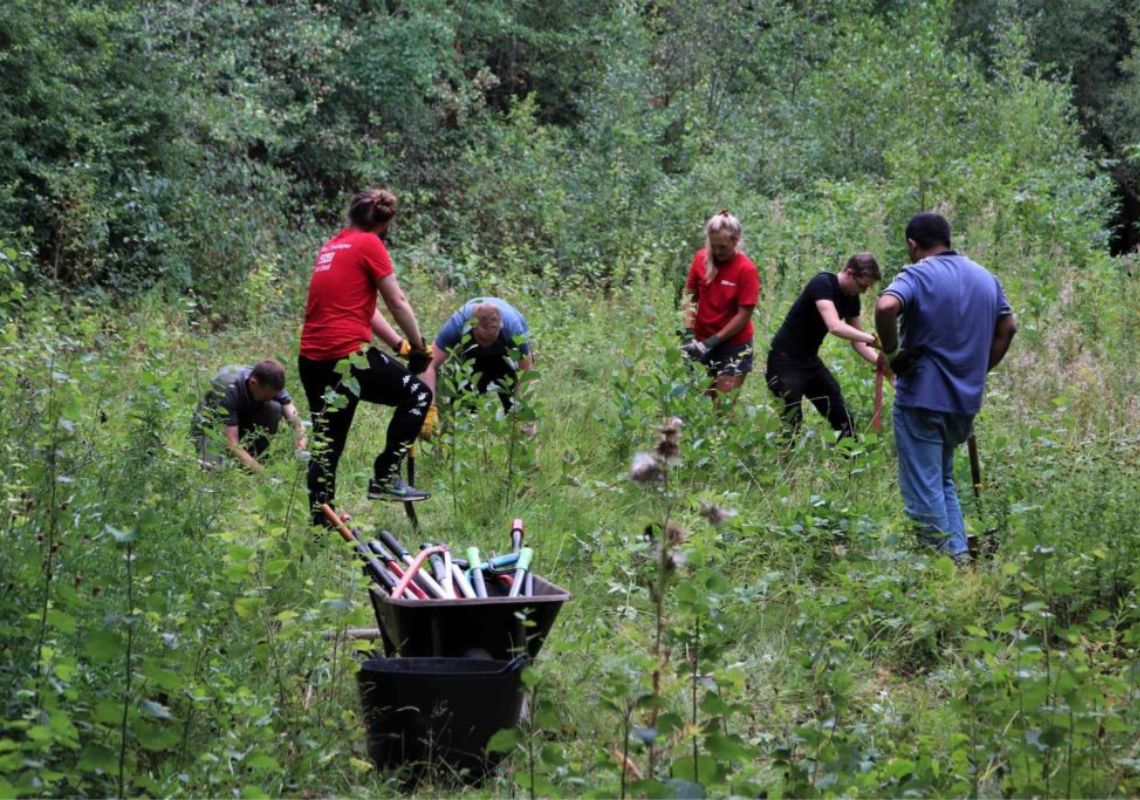
The meadow is mown every year in September when the flowers have set seed. The cuttings are raked off and composted to prevent the soil becoming fertile. Most wildflowers prefer poor quality soil so as not to be outcompeted by lush growth of grasses, nettles and docks.
Scrapes provide habitat for water beetles and other aquatic insects. Flowers which tolerate damp conditions such as Yellow Iris Iris pseudacorus, Purple Loosestrife Lythrum salicaria, Ragged Robin Lychnis flos-cuculi and Meadowsweet Filipendula ulmaria all grow at the edge of the scrapes.
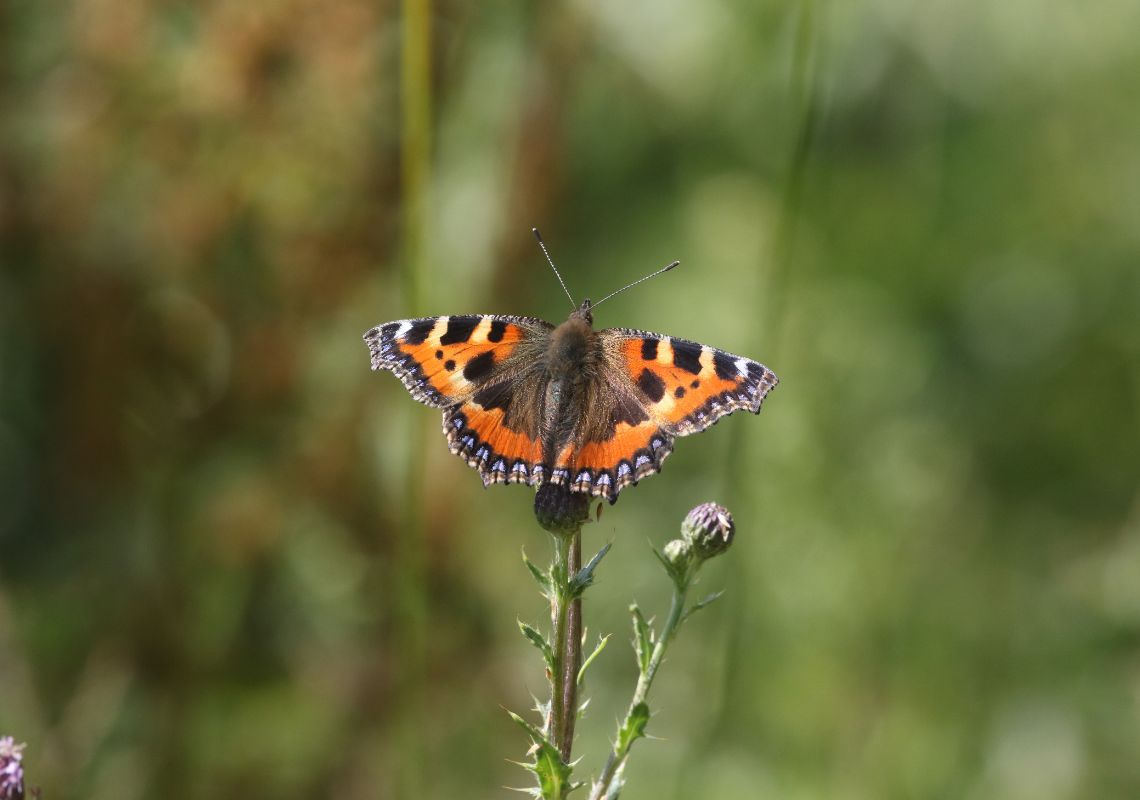
In summer: look out for a variety of butterflies that can be spotted feeding on the nectar provided by the wildflowers. Four-Spotted Chasers Libellula quadrimaculata (dragonfly species) can also be seen hunting over the meadow on warmer days!
In winter: the dead hedge at the back of the meadow provides excellent habitat for hibernating insects and mammals. We built these using the materials cleared from surrounding woods and scrubland as part of our management plan for the site.