
Supporting Refugees and Asylum Seekers to Connect, Learn and Thrive at Rainbow Haven Community Centre
For many refugees and asylum seekers, building a new life means finding opportunities to connect with others, learn new skills and feel a sense of belonging. At Rainbow Haven in Gorton, a community gardening project has transformed an outdoor space into a thriving, accessible garden where volunteers can grow food, share experiences and connect with nature.
Creating a Space for Community and Connection at Rainbow Haven
The programme was designed to create a sense of ownership and belonging, while providing opportunities for people to connect with others at the hub and spend time outdoors. Katherine, our Community Projects Lead for the programme, shared her thoughts:
“Many of the volunteers don’t have access to a garden because they’re living in temporary accommodation. It was important to create a space they could help design, improve and feel proud of.”
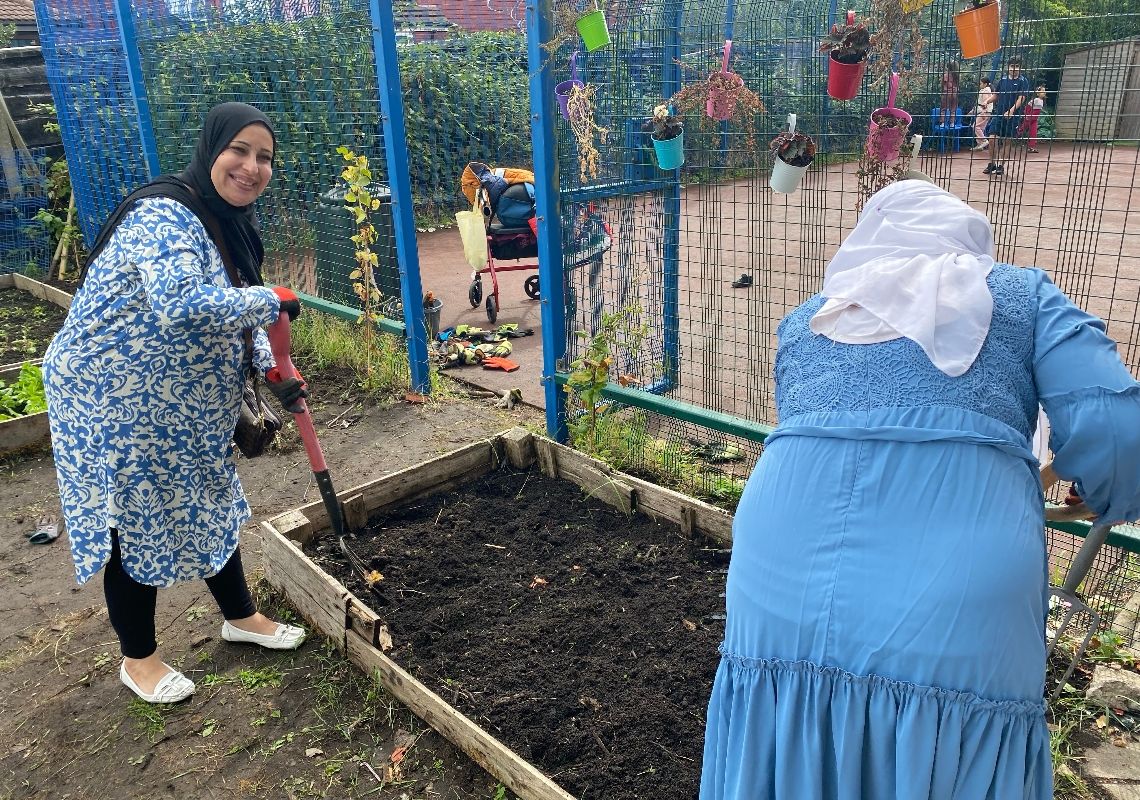
Conversations about planting and food opened up opportunities for volunteers to share memories of family farms and gardens from their home countries, helping people connect through shared experiences and cultural traditions.
“The garden naturally sparked conversations about people’s histories and experiences. It gave volunteers the chance to share knowledge and stories that might not otherwise have been heard.”
Building Skills and Confidence
Throughout the programme, volunteers developed practical green skills, from planting and harvesting vegetables to building raised beds and wildlife habitats.
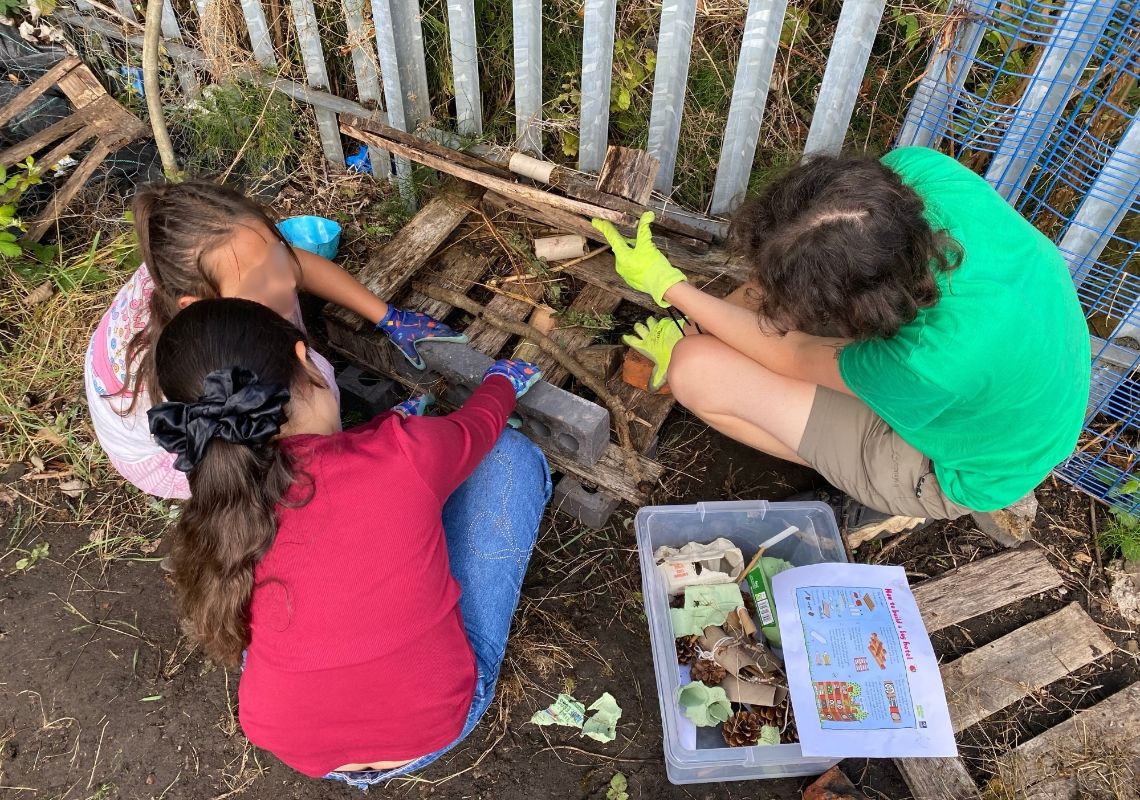
Children attending the sessions learned how to safely use tools such as saws and electric drills while helping construct planters and a bug hotel.
“None of the children had used a drill or saw before. Seeing their confidence grow as they learned new skills and created something together was really rewarding.”
The project also introduced volunteers to new ways of growing food. While some participants arrived with gardening and farming knowledge, they were also excited to learn new techniques and share their expertise.
“One volunteer was fascinated by hydroponics when we tried growing cress. Although it didn’t work as planned, he loved learning about a completely different approach to growing food.”
Connecting with Nature
Alongside growing food, volunteers explored local wildlife through pollinator surveys and habitat creation activities. For some participants, it was their first opportunity to engage closely with insects and biodiversity.
“A few of the children were quite nervous around insects at first, but once they learned why they were important and started looking more closely, that fear began to disappear.”
The project was designed to ensure everyone could participate, regardless of confidence, ability or interest. Those who preferred creative activities were able to paint decorations and produce signs and labels for the garden, helping make the space feel truly community-owned.
Growing Food and Improving Wellbeing
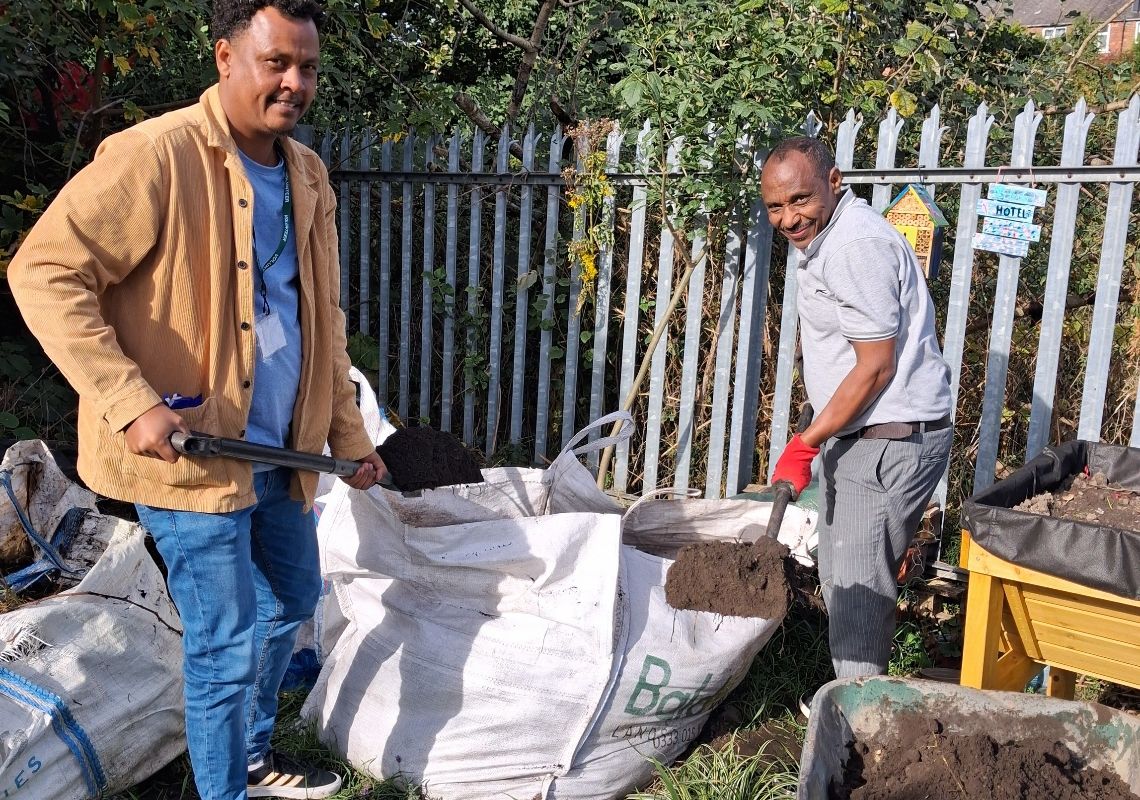
The garden is already providing practical benefits for the Rainbow Haven community. Volunteers have harvested vegetables to take home, while surplus produce has been used in the hub’s kitchen to prepare meals for visitors.
The space also provides a peaceful environment where people can spend time outdoors, connect with nature and improve their wellbeing.
“The site manager commented that volunteers were looking forward to the sessions every week, and one volunteer was disappointed when they finished because they had enjoyed them so much.”
Overcoming Challenges Together
Like many community projects, there were challenges to overcome. Language barriers sometimes made communication difficult, but volunteers and staff worked together to find solutions.
“Google Translate became one of our most useful tools. It helped us understand what people wanted from the space and made sure everyone could contribute to decisions.”
Katherine also worked hard to ensure all volunteers felt able to participate equally.
“Sometimes the men with construction experience would naturally take over practical tasks. Encouraging everyone to take turns using the tools meant the women and children were able to learn alongside them, and it became a much more collaborative environment.”
Looking Ahead
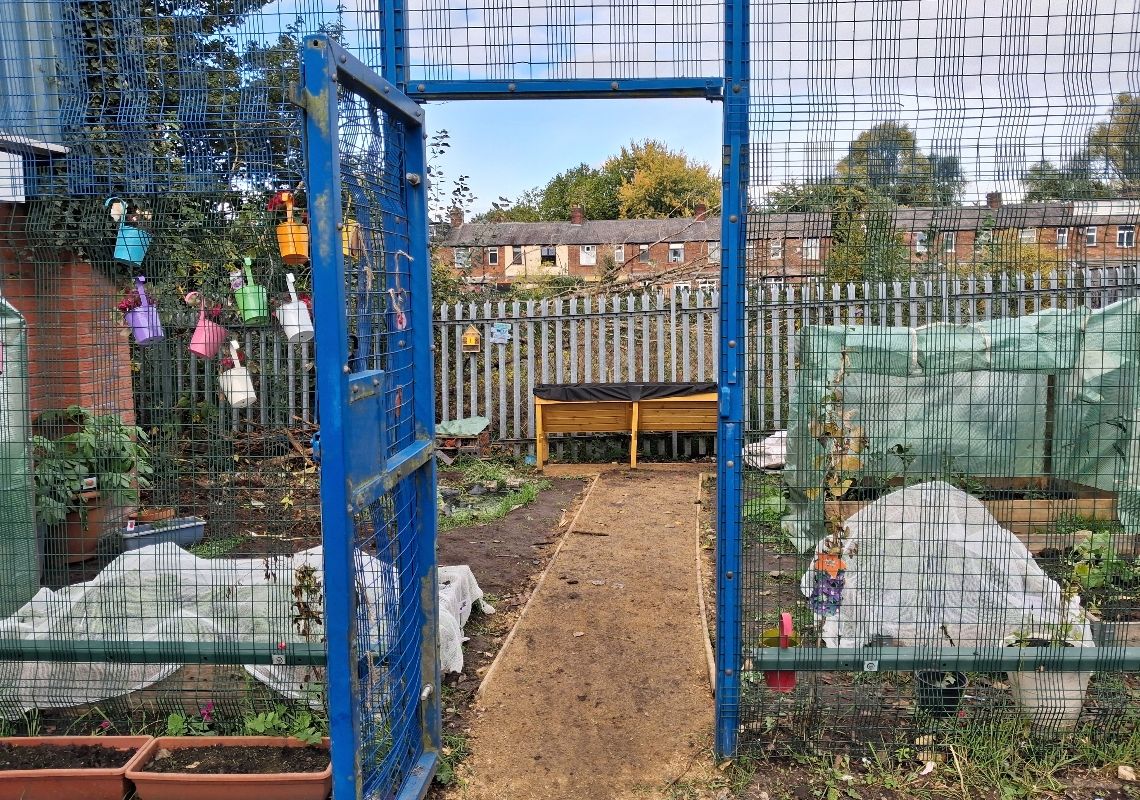
The impact of the garden continues to grow. Volunteers have already suggested future improvements, including expanding growing areas and installing another greenhouse to increase food production.
Rainbow Haven is also exploring opportunities to connect participants with wider nature-based activities, including Wellies in the Woods sessions at Clayton Vale and future food-growing projects.
“The enthusiasm people have shown for improving the space has been fantastic. This feels like the beginning of something that can continue growing with the community.”
By combining everyday connections with nature, practical skills for a sustainable future and opportunities to build meaningful relationships, the Rainbow Haven garden demonstrates how community-led green spaces can support wellbeing, confidence and belonging. It is a powerful example of how inclusive communities are stronger communities, and how access to nature can help people feel welcomed, valued and connected.