Following the Water: Lessons from Groundwork London's SUDS Retrofit Journey
Groundwork London's Landscape Architect Team share lessons in their journey so far into SuDs Retrofit across London
Reimagining London’s drainage
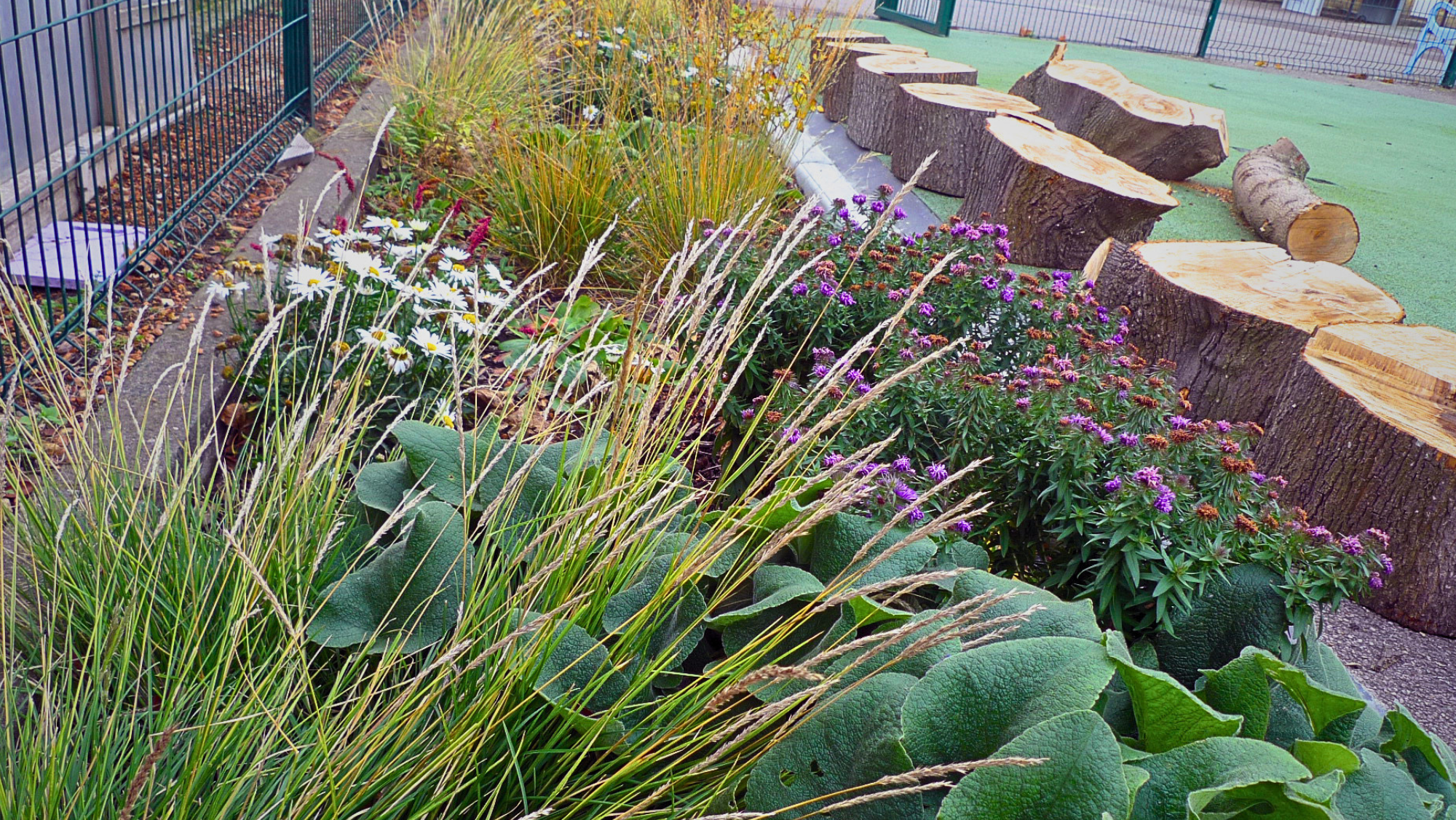
At John Burns Primary School in Wandsworth, children watch rainwater travel through a bold, winding downpipe into a rain garden designed to capture rainwater and support biodiversity. It’s helping them understand how water moves through the environment. It also means that unlike many London playgrounds, theirs doesn’t flood during playtime. Their playground has gained from a SuDS (sustainable drainage systems) retrofit thanks to Groundwork London and funding from their local council, the Department for Education and Thames Water. Not every Primary School can say the same.
When rain falls on our towns and cities, it often becomes a problem before it becomes a resource. Decades of urban development have left much of the city covered by hard surfaces, sending water rapidly into drainage systems rather than allowing it to follow its natural path into the ground. Traditional drainage networks are not enough anymore to handle the levels of unexpected and intense rainfall we’re seeing in the UK because of climate change, and we’re seeing the impacts on our roads, our walkways, in our gardens and in our public spaces.
The Climate emergency means we are seeing a change in rainfall patterns. A rainfall event of just 50mm (which is increasingly common during intense summer storms) falling on a 1,000m² impermeable area (a 5-a-side football pitch) generates approximately 50,000 litres of runoff—enough to fill around 625 bathtubs.
Sustainable Drainage Systems (SuDS) offer a different approach. Rain gardens, swales, permeable paving and flow-through planters are just a few interventions that manage rainwater and help green spaces become more resilient, slowing storing and filtering water while creating greener, healthier places for people and wildlife.
For over 15 years, Groundwork London’s expert landscape architecture team has designed and overseen delivery of many SuDS retrofit projects across schools, housing estates, parks and public spaces. These spaces have been transformed into thriving green infrastructure, providing valuable lessons about what it takes to implement nature-based solutions into an already complex city.
The reality beneath the surface
The benefits of nature-based solutions like SuDS are clear, and there is a growing appetite within Local Authorities and other public bodies to implement better, more sustainable, rainwater management system within existing sites. On paper, a site may appear to offer clear opportunities for rain gardens, swales or permeable surfaces. However, there are often many constraints such as underground cables and pipework, tree roots and challenging topography, which can affect feasibility. Successful projects rely on understanding the site and its wider landscape through site visits, ground and utilities surveys, infiltration testing and sharing local knowledge.
Rather than viewing on-site conditions as restrictions, the team have learned to use this a design tool to create more dynamic and unique designs, which result in successful spaces with a true sense of place. Projects are often exercises in creative problem-solving as well as good design.
The lesson: Flexibility is not a contingency plan in SuDS retrofit – it is part of the design process.
The team compared SuDS retrofit briefs to solving a jigsaw puzzle. Unlike new developments, existing spaces come with established buildings and underground pipes, unseen utilities, mature trees, access requirements and drainage networks. Every intervention must work around these constraints while still delivering meaningful outcomes.
On the Gloucester Avenue project in Margate, Kent, the SuDS scheme was carefully designed to accommodate existing services identified by GPR surveys, utility searches and CAT scans. However, when the contractor broke ground, the team discovered the cabling was in such poor condition that the design had to be adapted to avoid causing further deterioration. Despite this, a successful series of swales could still be implemented which significantly reduced the pressure on the existing drainage network of the area. “It’s like archaeology; you won’t know exactly what’s down there until you start digging. You need to be able to adapt if it’s not as expected” says Nicola Keen, Associate Landscape Architect
The lesson: Successful SuDS retrofit is built on collaboration and adaptability. Expect the unexpected and be prepared to amend plans in response to site conditions.
The power of partnership: John Burns Primary School
Many of the most successful initiatives emerged because organisations, funders, schools, councils, water companies, highways representatives and flood risk managers worked together towards a shared vision to make spaces more resilient to flash flooding.
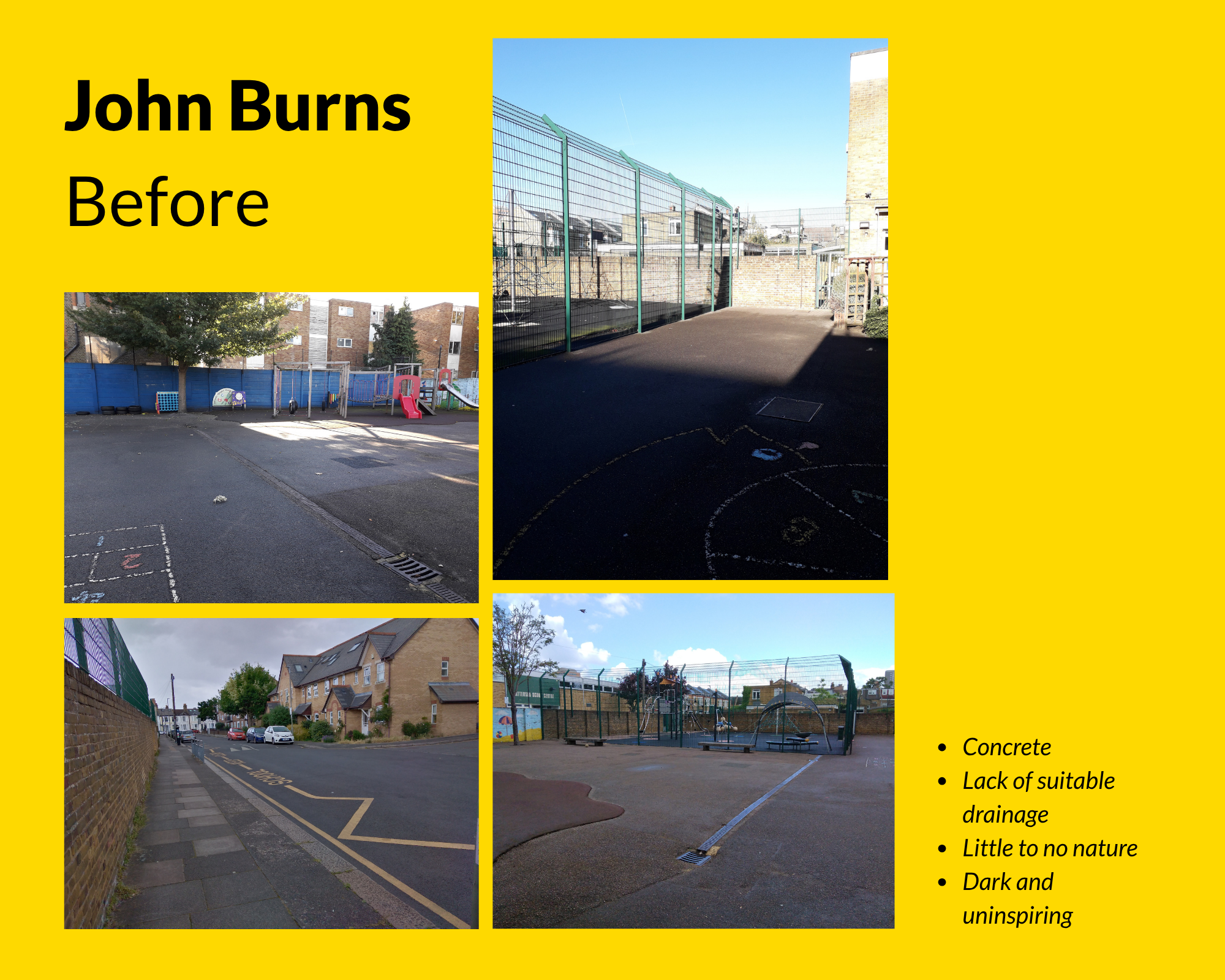
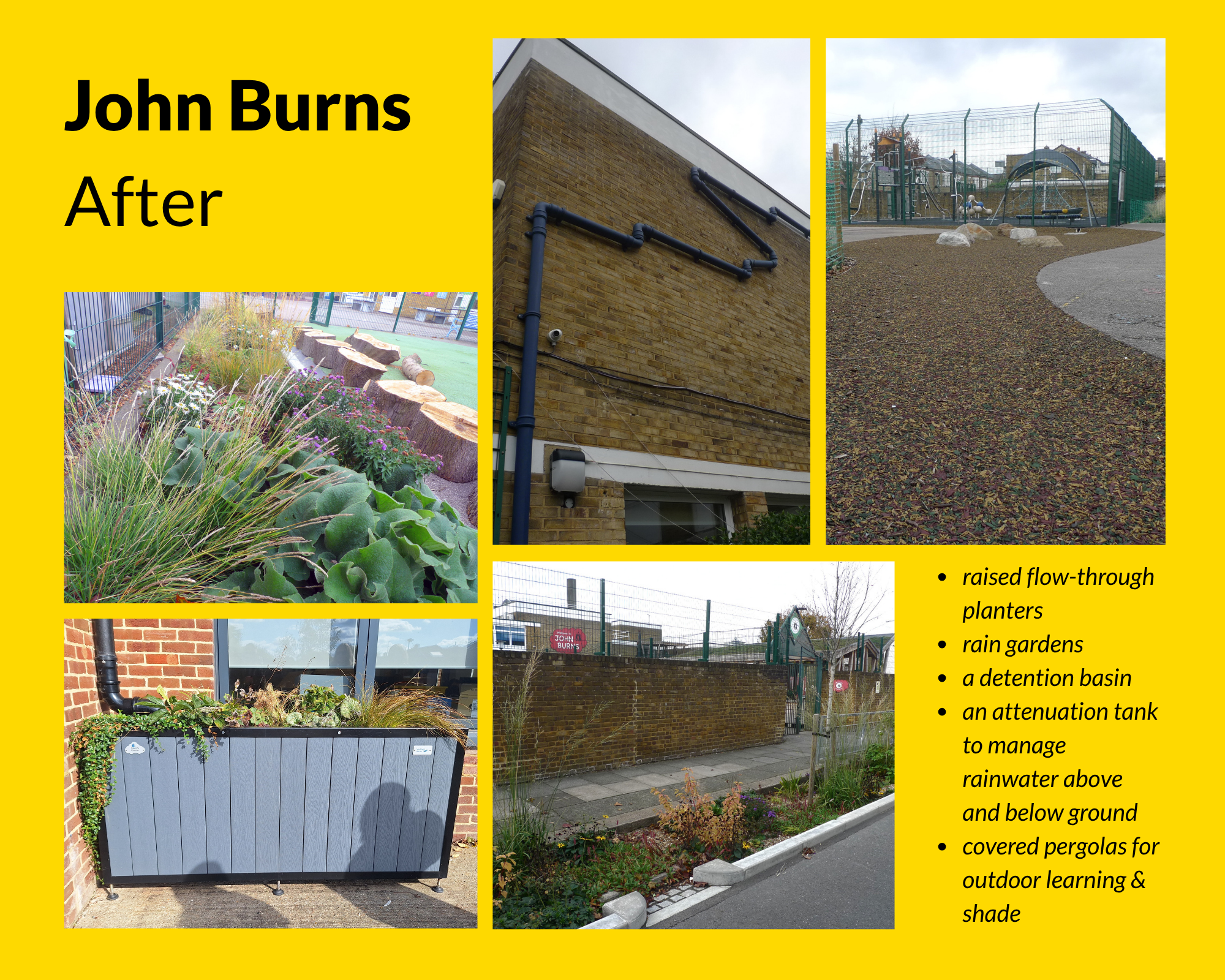
The London Borough of Wandsworth, Thames Water and the Department for Education funded nature-based solutions for John Burns School in 2025 with the goal to significantly reduce surface water runoff from the school site (0.32ha). The Landscape Architect team designed innovative SuDS features with play in mind. The project utilised:
- raised flow-through planters
- rain gardens
- a detention basin
- an attenuation tank to manage rainwater above and below ground
- covered pergolas for outdoor learning & shade
New learning opportunities for pupils were introduced through a series of visible SuDS including a “wiggly” downpipe from the main school building roof, into the new raingarden via a flow-through-planter, enabling children to see and understand the flow of rainwater.
The success of the project was greatly dependant on the investigations on site once the project began, the creativity of the Landscape Architects, and importantly, the determination and influence of all involved.
The lesson: SuDS retrofit delivers the most benefits when the community is involved and understand the process.
The importance of maintenance
Creating SuDS is only the beginning and the long-term success of each site is dependant on maintenance teams’ understanding how these landscapes function. A rain garden is not simply a flowerbed. A swale is not just a shallow depression in the ground.
Groundwork London’s experience has highlighted the need for stronger connections between design teams and those responsible for ongoing grounds management. Responsibilities can sit across highways, parks, housing and other departments, each with different priorities and practices. Engaging with the communities who will be living or working alongside the SuDS is vital to understand how the space works (or doesn’t work) now and how it can be changed for the better.
Experience calls for updated training, knowledge sharing and processes that enable SuDS to become part of everyday landscape management rather than specialist infrastructure. Surprisingly, SuDS features do not require specialist or onerous maintenance techniques. What is needed is an understanding of what they are, what they do, and how they benefit wider environmental concerns. With support, community groups can play a role in maintaining SuDS and wider greenspaces.
The lesson: SuDS must be sustainable. Maintenance is crucial to their long-term success but this doesn’t need to be complex or more expensive than maintenance of any other green space.
Designing for people as well as water
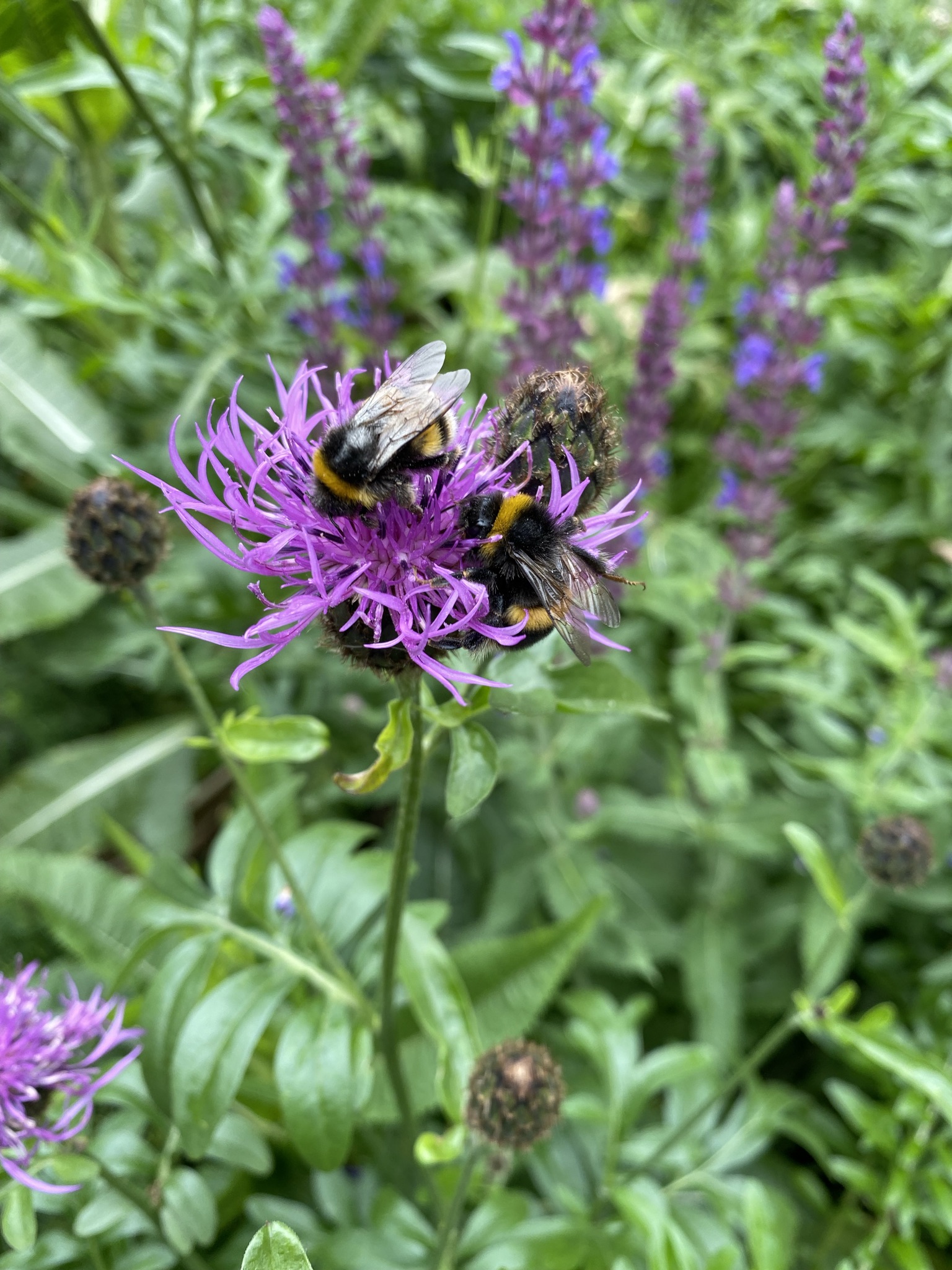
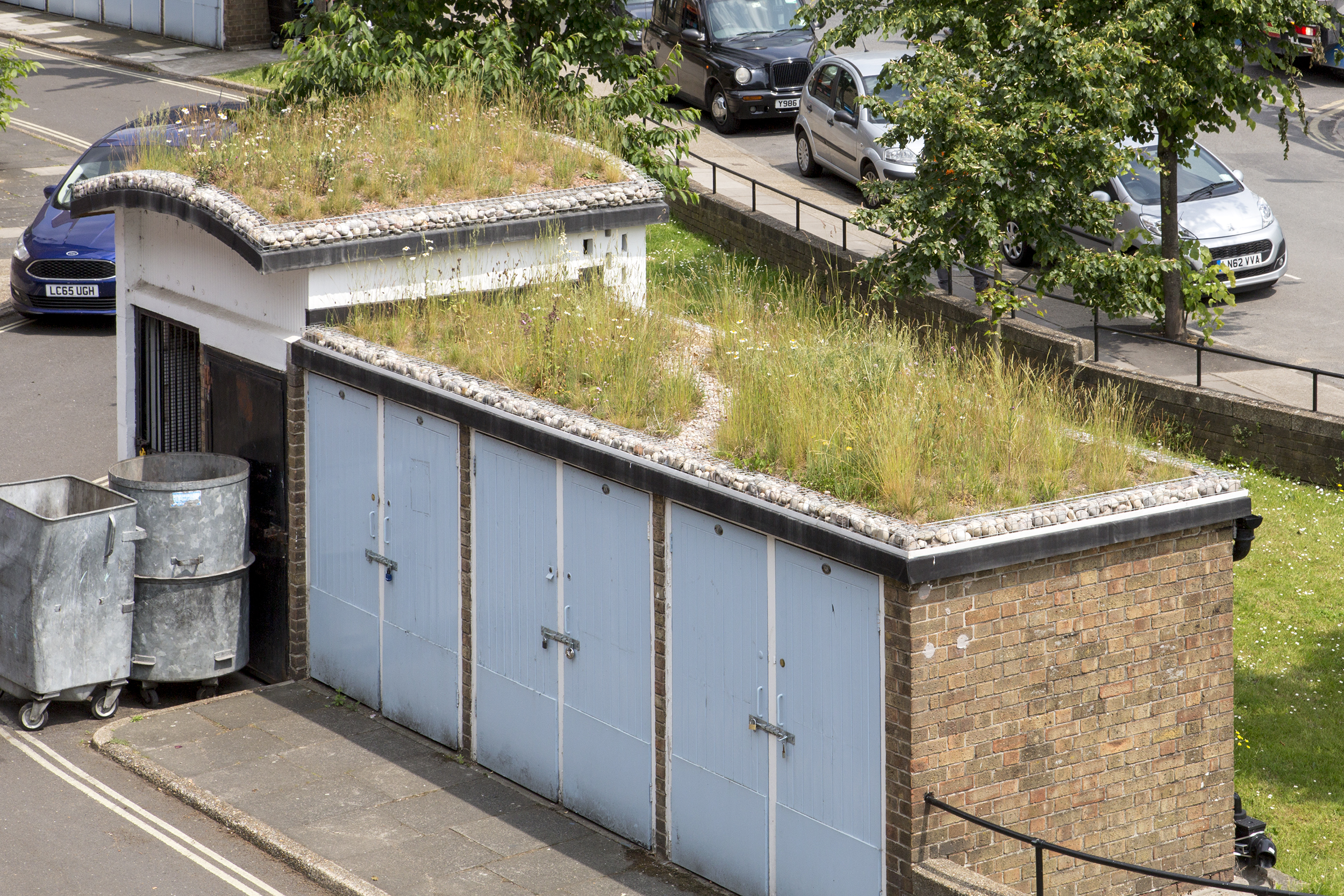
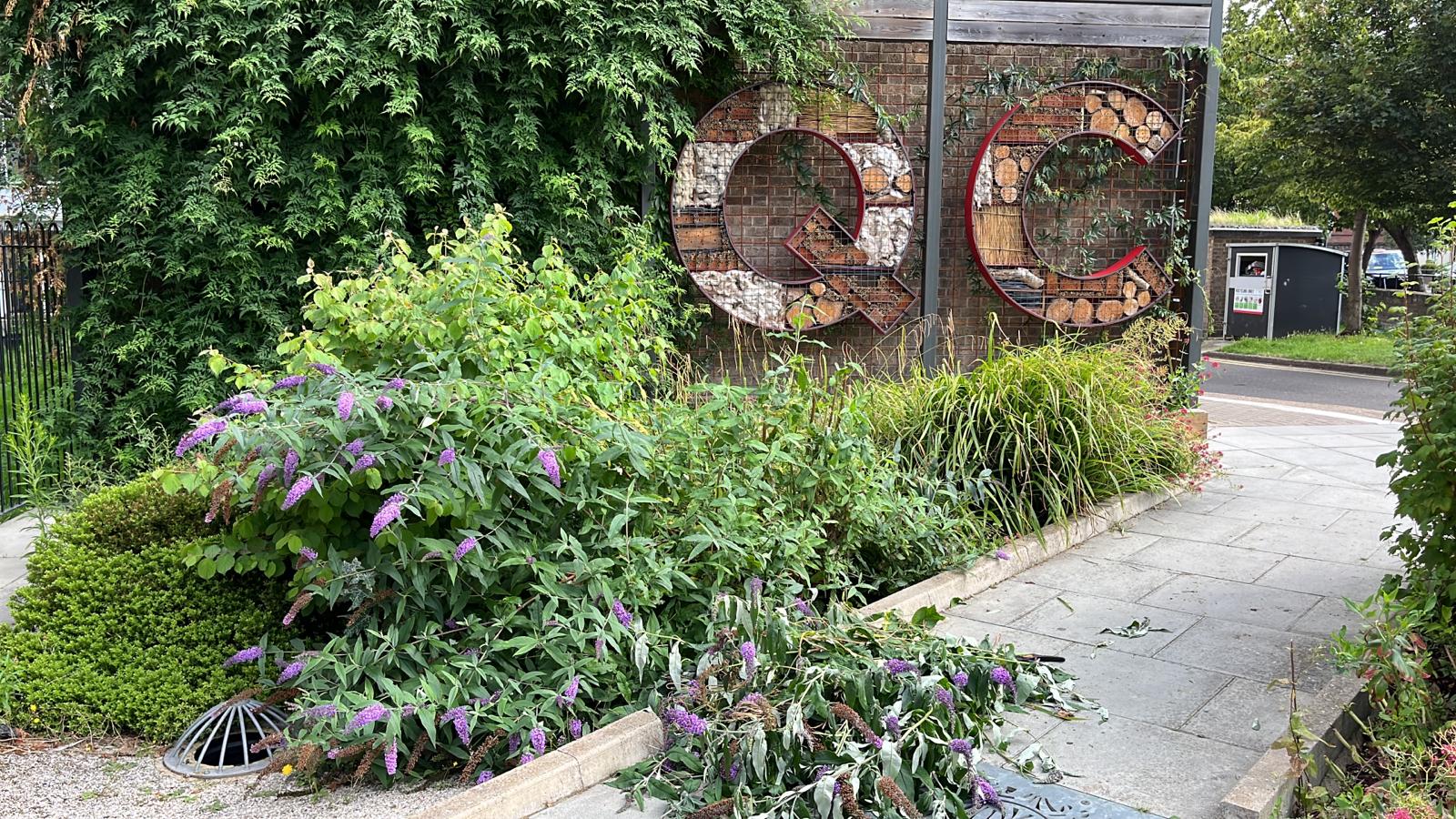
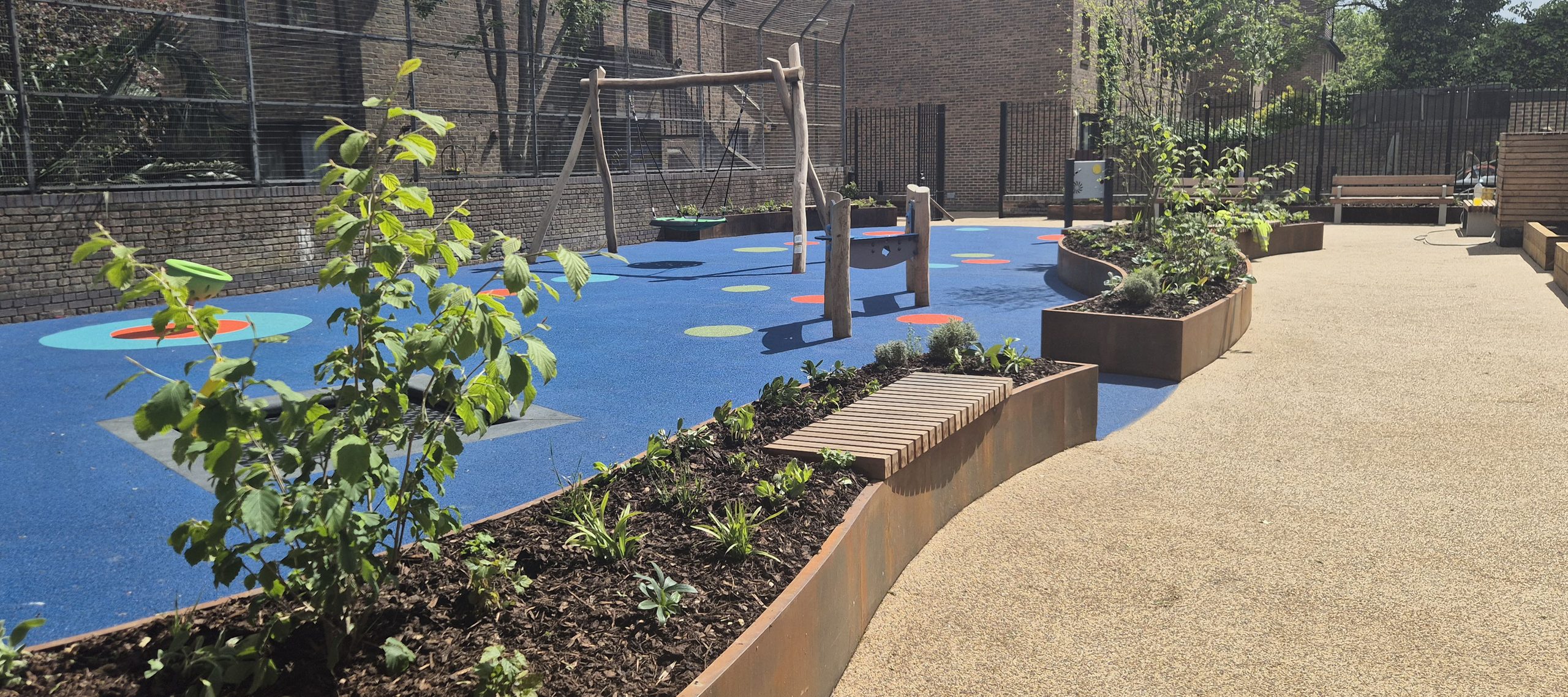
Rain gardens, swales, planters, green walls and green roofs create richer, more attractive places for people to enjoy and connect with nature by create greener and more biodiverse environments.
The team focus their designs on accessibility, social value and inclusion from the outset rather than treating these as secondary considerations. Pathways, materials, diverse planting, and movement through space are considered as important as the choice of SuDs. The team says “It’s not about designing something and then making it accessible; it’s about designing this in an accessible way.”
School projects helped children learn about water and nature. Housing schemes created better-shared spaces for residents and the local community. Trees provide shade and shelter. Biodiverse planting introduced colour, texture and habitat into urban environments. It’s about people living in harmony with nature.
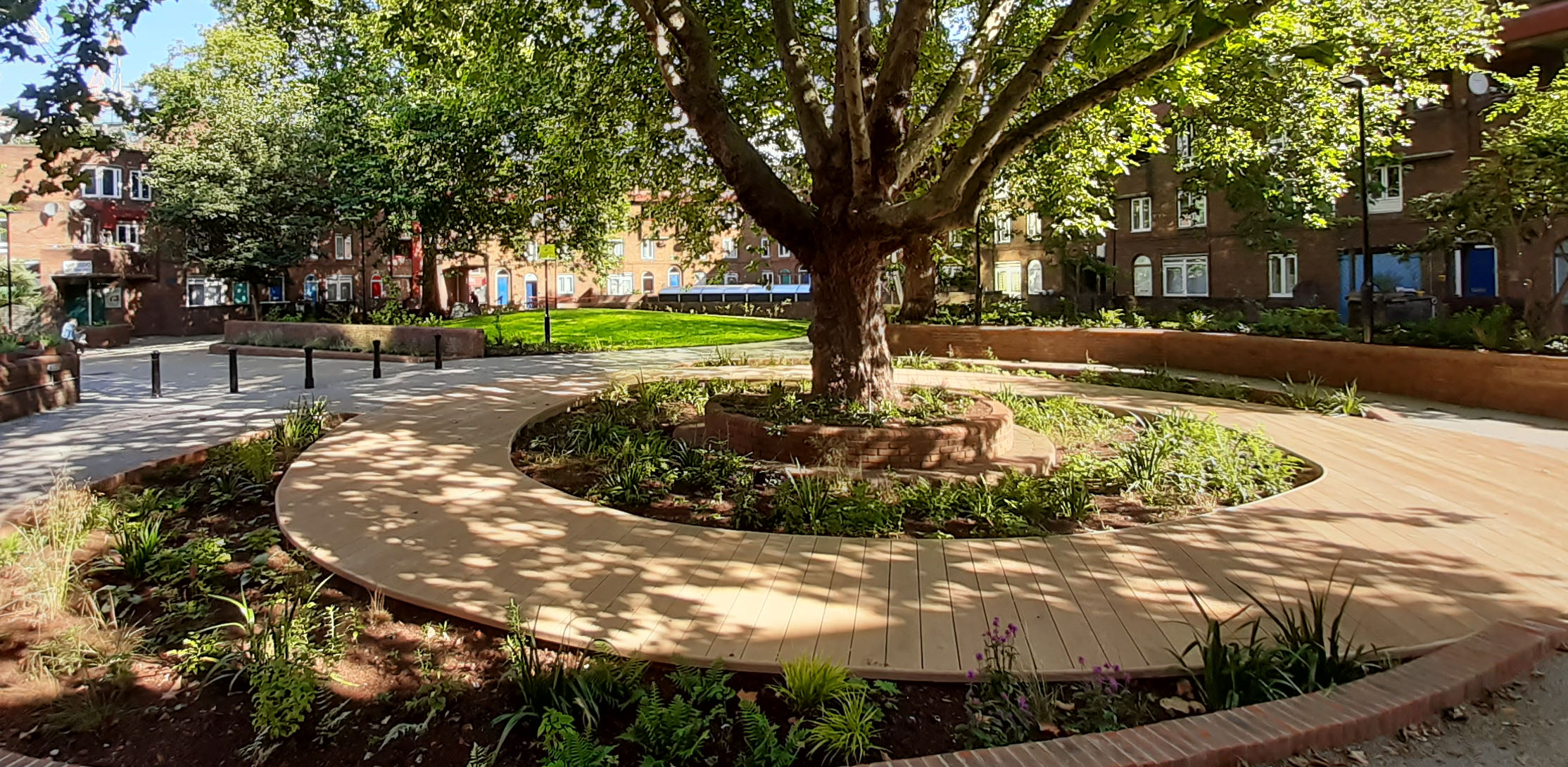
Projects focus on using nature-based solutions, mimicking natural processes so that rainwater can drain away naturally. At George Mews, in the London Borough of Camden, the team reduced impermeable surfacing as much as possible, especially under the existing mature trees, to improve their growth and surrounding biodiversity. By installing a series of rain gardens and planting beds to manage and direct rainfall through the estate, the design changed the flow of the space, softening the area and creating destinations defined by planters. Improvements to the space also resulted in a reduction in anti-social behaviour. Overall, the site redesign was much more welcoming and intention focused, as well as improving rainwater management.
The lesson: SuDS retrofit schemes should not be designed in isolation. They can be the catalyst for wider public realm improvements.
Measuring success
As investment in SuDS grows, so does the need to demonstrate impact and measurable success, from how much stormwater was filtered before entering sewers to the social value gained.
The irony is, most of what is measurable disappears beneath the surface. When a rain garden works, water quietly infiltrates the ground. When a swale performs as intended, streets stay dry. Rainwater is absorbed so well that there’s less left to measure. Thanks to the redesign at John Burns Primary School and working with engineers EPG, the site filters rainwater nearly 70% slower during extreme storms, drastically reducing flood risk. “The SuDs devices worked so well… there weren’t any puddles to jump in!” says Stuart who led the landscape redesign with SuDS retrofit.
In 2024, Groundwork London’s Green Blue You project in Hillingdon saw 2000m2 of rainwater redirected thanks to the 16 SuDs implemented which included swales, wildflower meadows, 350m2 new ornamental and pollinator-friendly shrubs and herbaceous perennials and 100 new trees!
Three sites in Hammersmith and Fulham showcase similar data, where retrofitted SuDS still haven’t reached their limit, and continue to reduce waterflow speed and absorb rainwater after more than 10 years of operation.
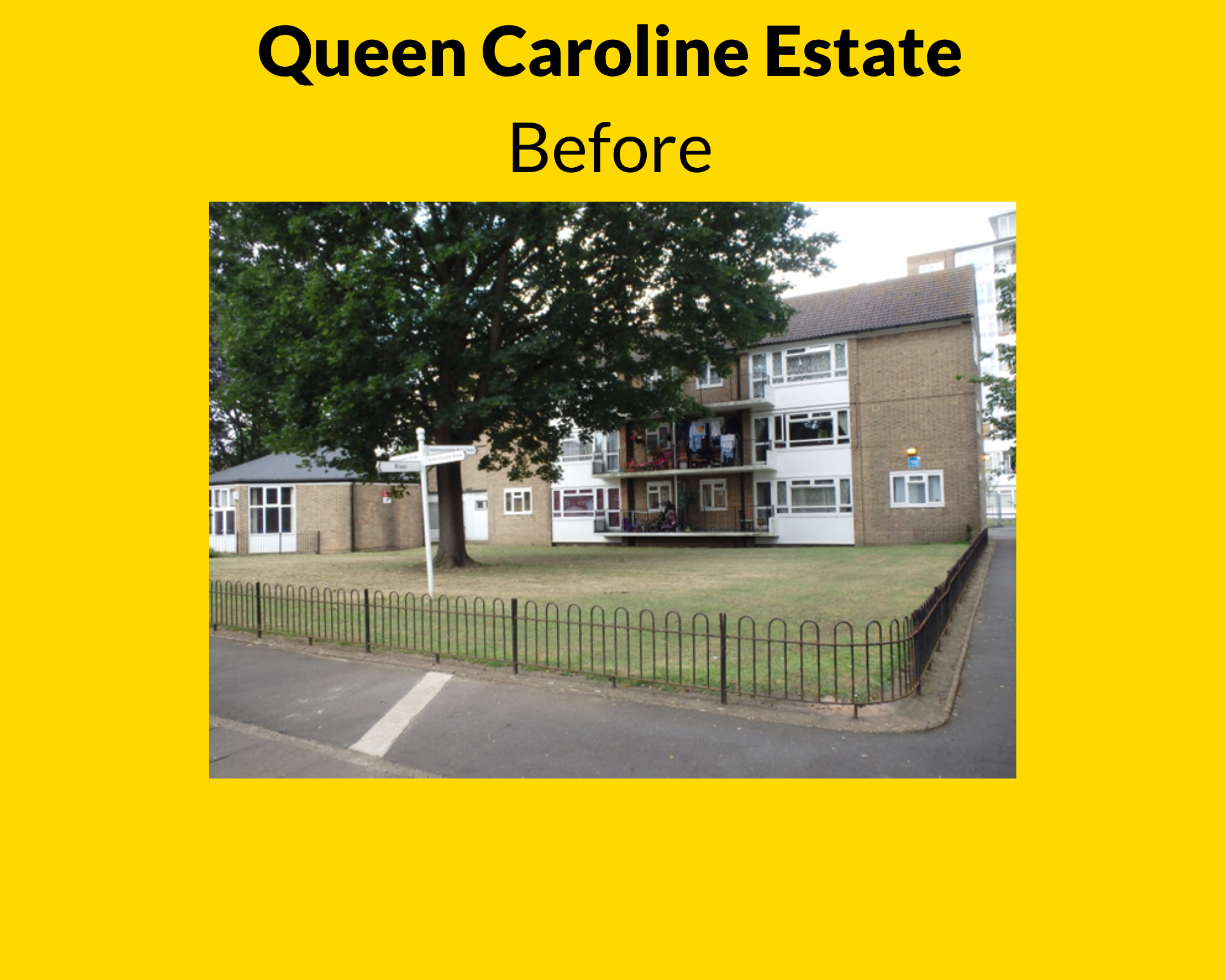
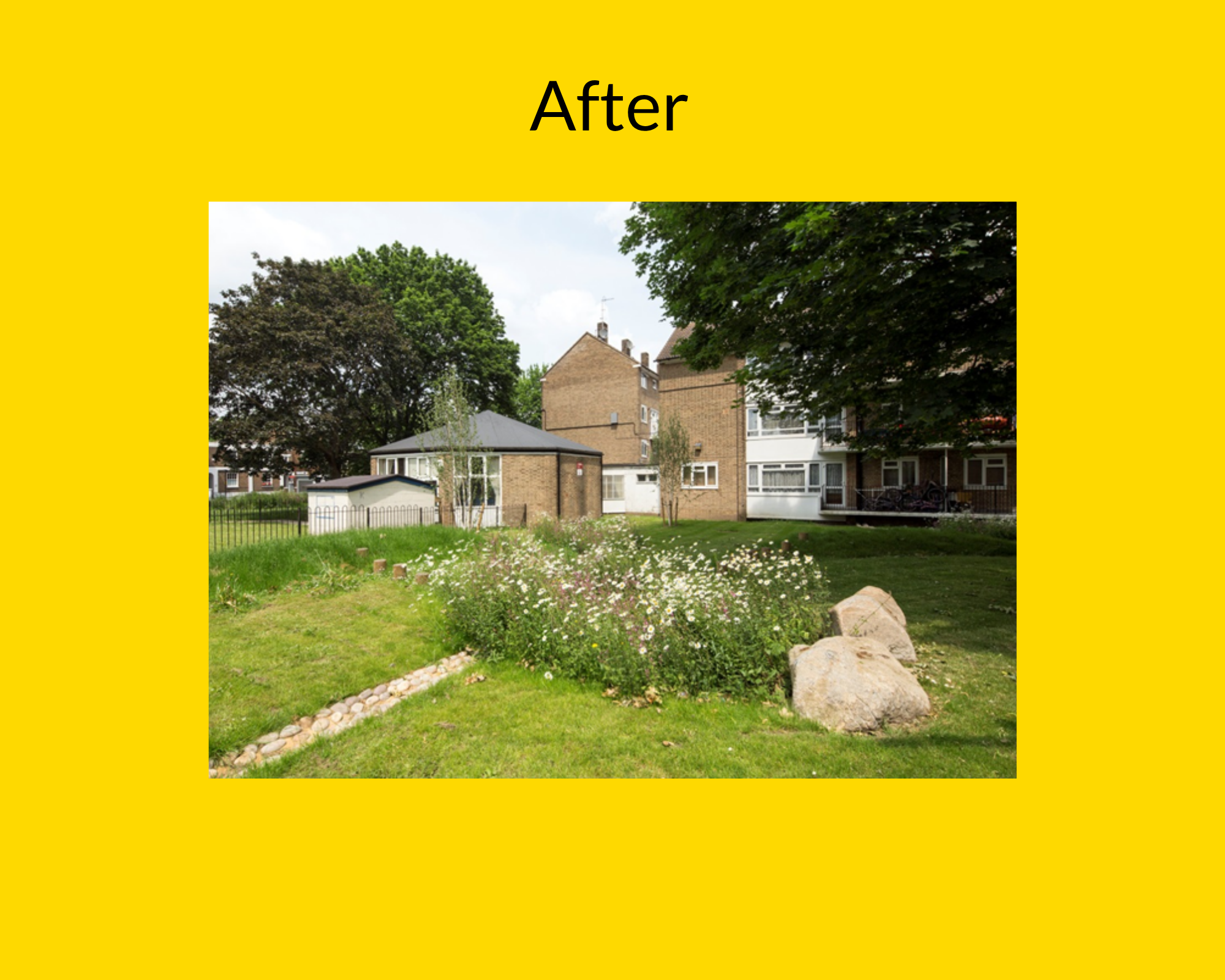
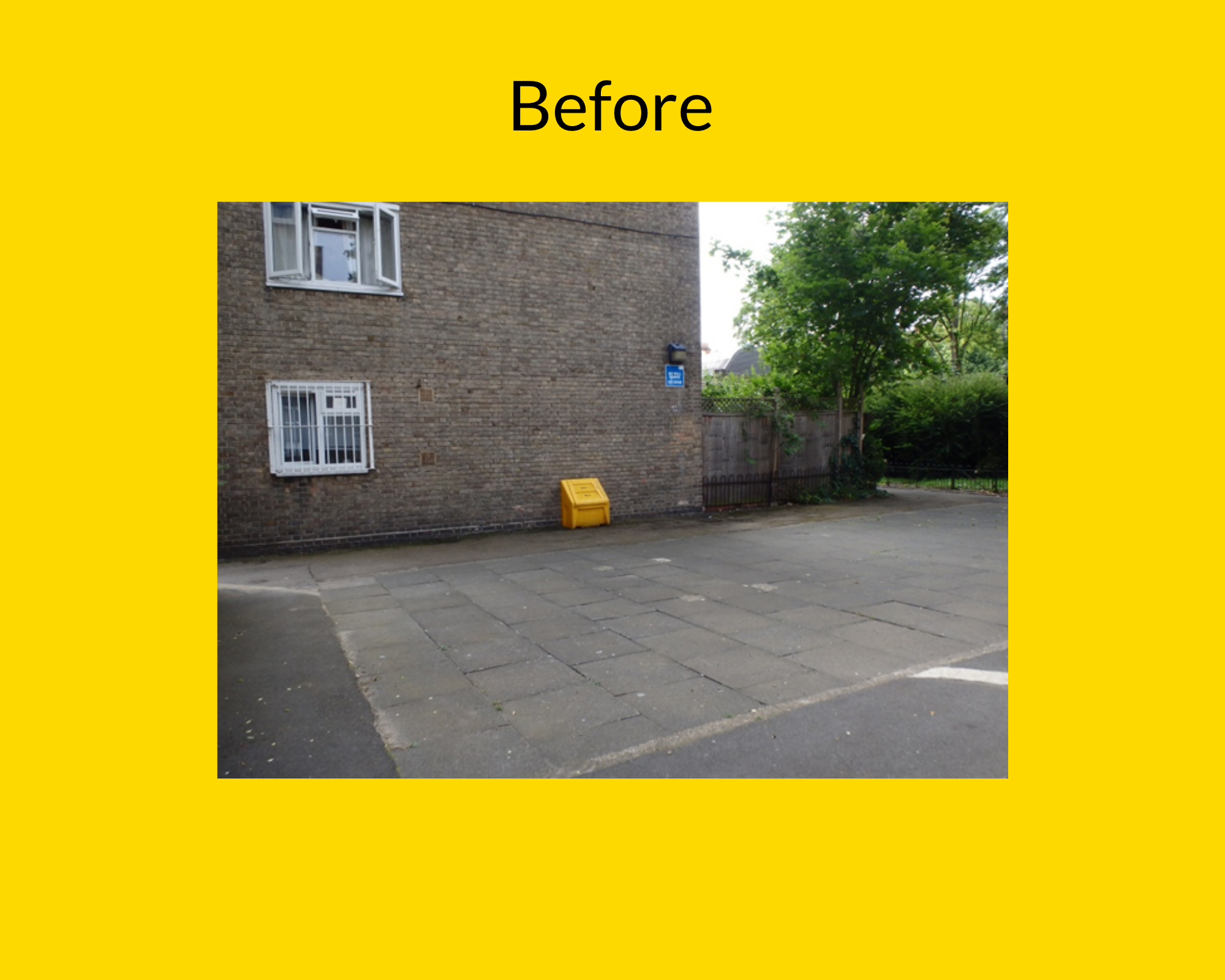
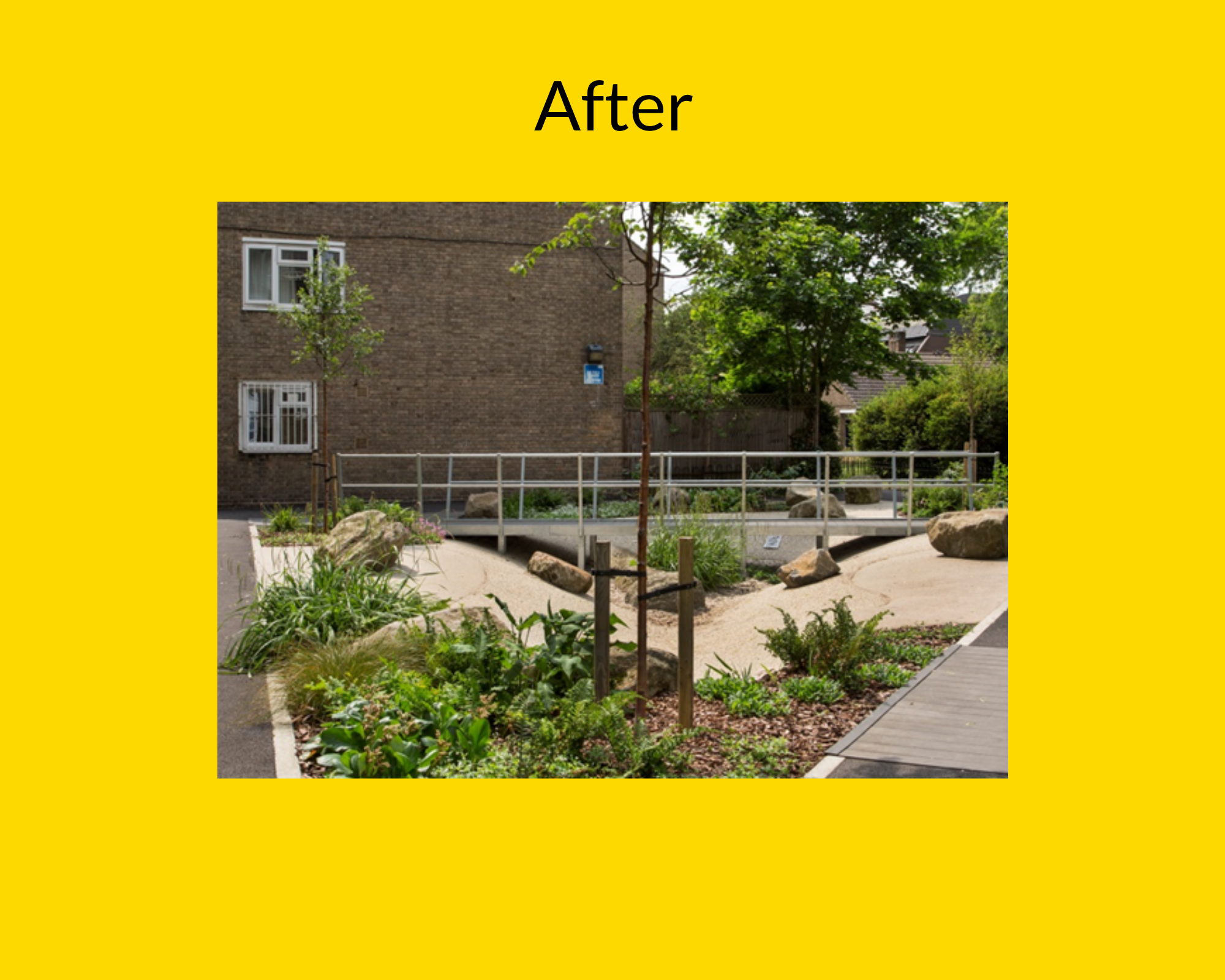
Success can also be measured in how people use the space in new ways, how they connect with nature, how often they use the site and how much more biodiverse their local spaces have become thanks to nature resilience alone. By following the water, the Landscape Architects at Groundwork London have managed to carve a path back to nature in abundance!
The lesson: A SuDS retrofit success story runs deep below the surface.
A Sponge City: every SuDS counts
SuDS retrofit is not always straightforward. It requires patience, investigation, collaboration and a willingness to adapt to unexpected surprises. Beneath every successful rain garden or green roof lies a story of negotiation, redesign, learning and persistence.
Yet these challenges also reveal opportunity.
Every retrofit project at Groundwork London has contributed to a wider transformation in how London manages water, supports biodiversity and creates healthier public spaces. The lessons learned by Groundwork London’s Landscape Design team demonstrate that resilient urban landscapes are not created through perfect conditions, but through continuous learning and partnership.
As more organisations embrace and embark on SuDS retrofit projects, experience will ensure that future endeavours are delivered more effectively, confidently and with even greater benefits for people and planet.
The journey is still unfolding, but the biggest lesson in SuDS retrofit is clear: London’s streets are greener, networks are more sustainable, and communities are better off with a city that works with water rather than against it.
Discover more and connect with our Landscape Architect Team here.
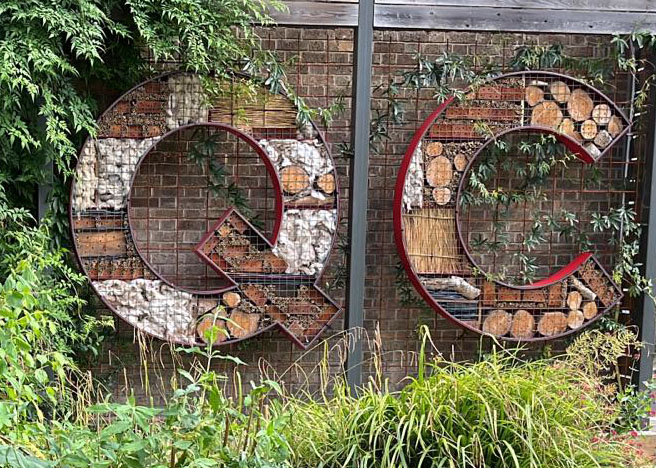
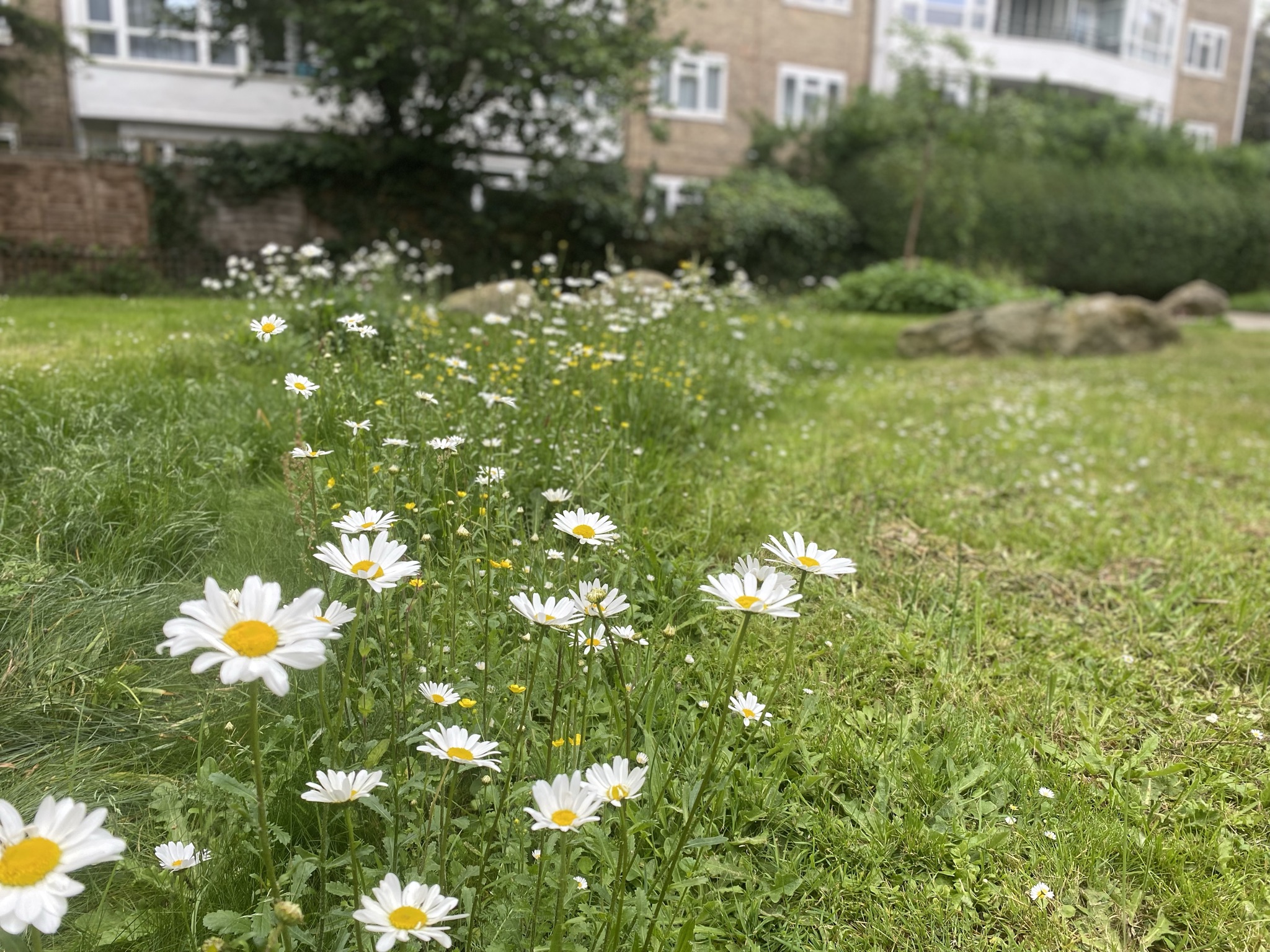
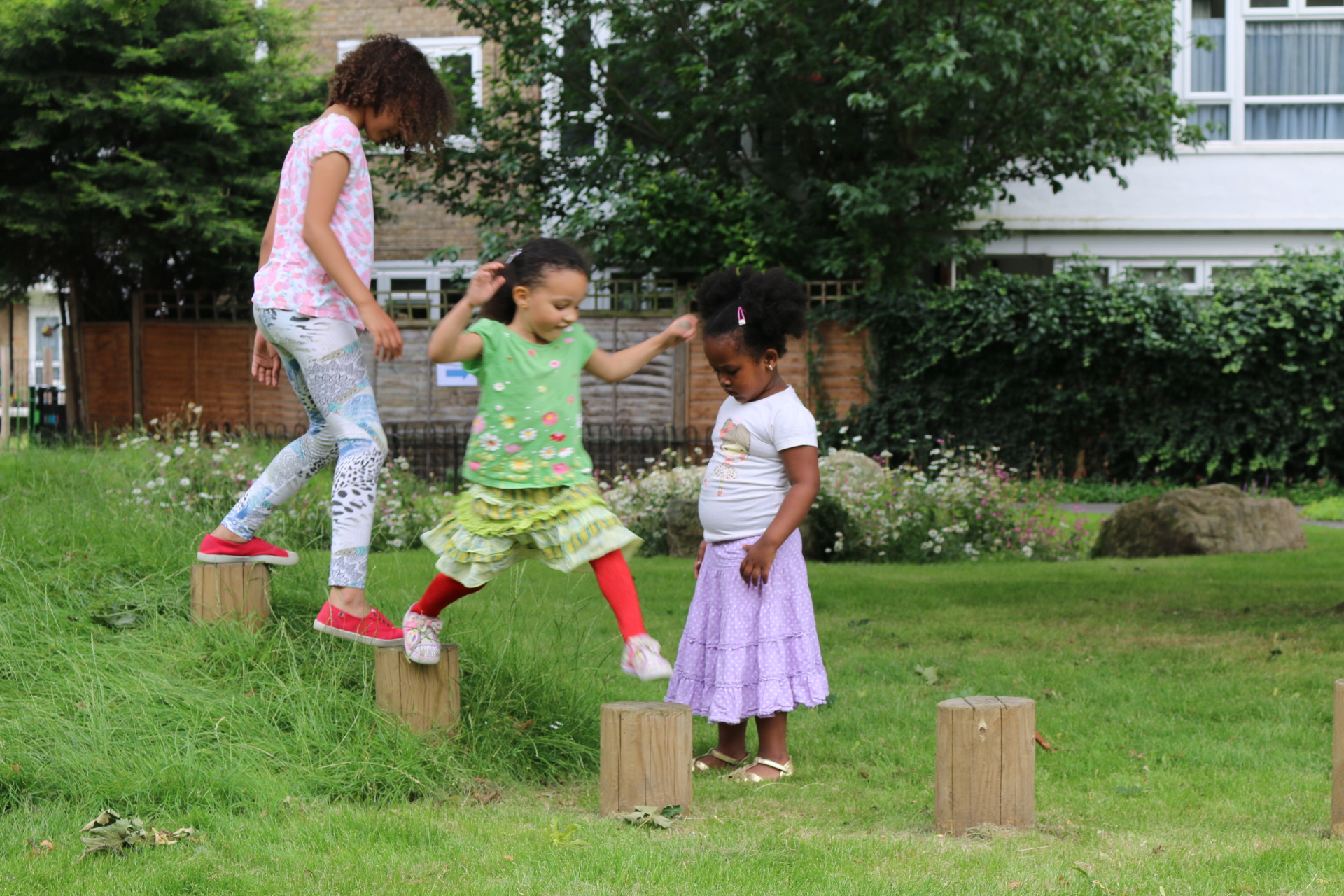
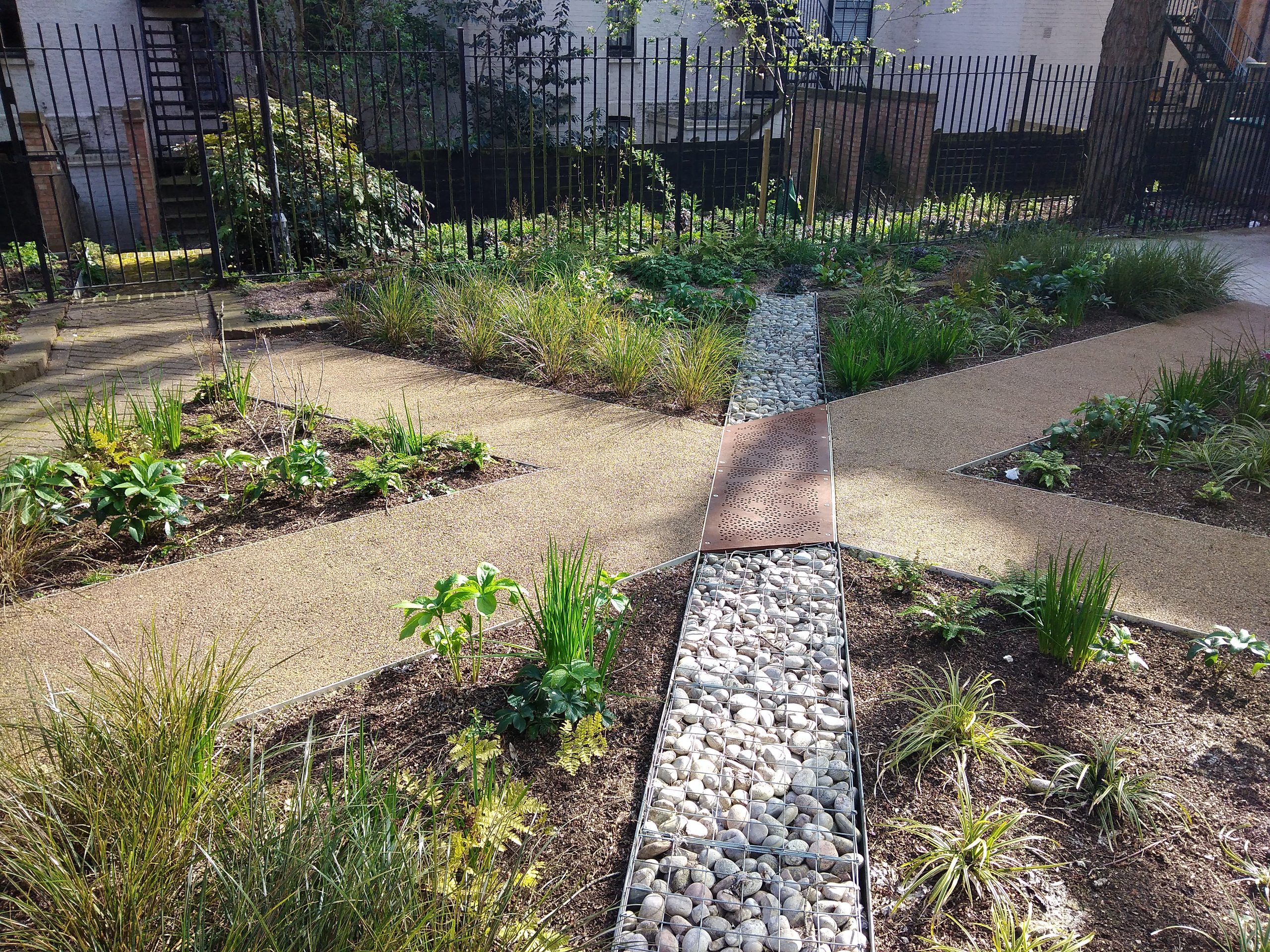
Below SuDS from various Landscape SuDS Retrofit projects: A bug hotel; a swale; SuDS and play; a rain garden; biodiverse planting; a green roof; a green wall