Treating Invasive Species across the Medlock Valley
Our dedicated team of rangers supported a targeted ecological restoration through the Medlock Valley project to combat the spread of Invasive Non-Native Species (INNS). Our primary goal was to treat 3 hectares of affected land, focusing on two highly invasive plants: Japanese Knotweed (Reynoutria japonica) and Himalayan Balsam (Impatiens glandulifera).
The Challenge
Invasive species pose a major threat to biodiversity, ecosystem stability, and local infrastructure. Japanese Knotweed and Himalayan Balsam, both introduced in the 19th century, have since spread aggressively across the UK, including within the Medlock Valley. Their unchecked growth displaces native vegetation, increases flood risks, and contributes to structural damage and financial burdens for landowners.
Target Species and Ecological Impact
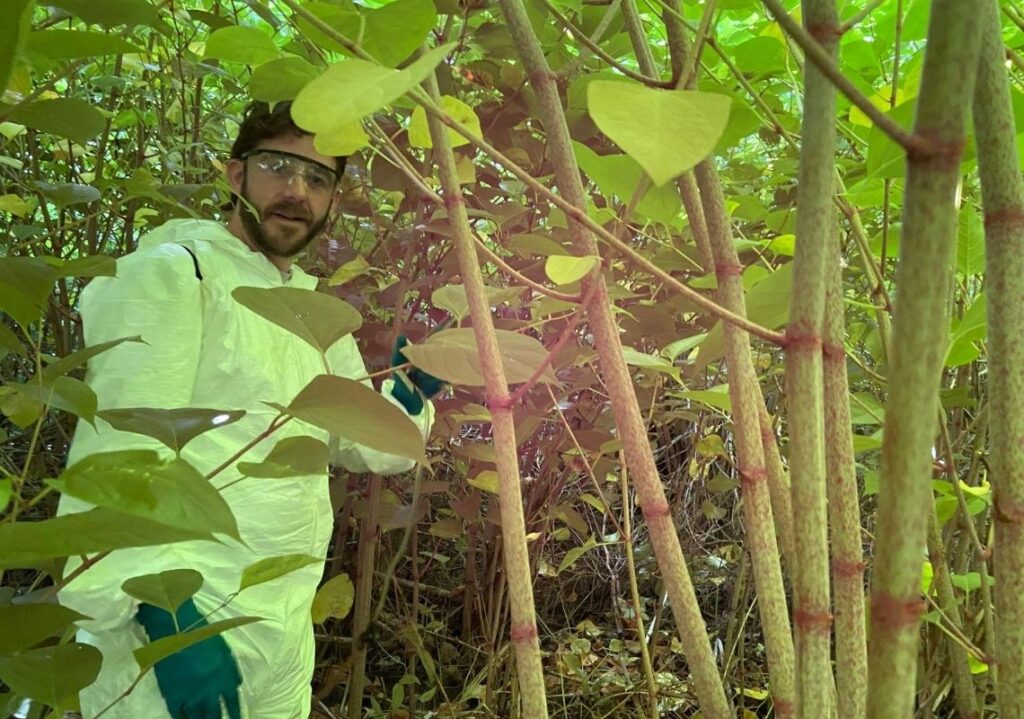
Japanese Knotweed (Reynoutria japonica)
History & Spread:
Originally introduced as an ornamental plant, it rapidly escaped cultivation.
Growth Characteristics:
- Propagates via deep, fast-growing rhizomes that extend up to 7 metres.
- Capable of penetrating concrete, tarmac, and building foundations.
Environmental & Economic Impact:
- A major concern for landowners due to its ability to devalue property and complicate mortgage approvals.
- Forms dense thickets, excluding native species by blocking light and depleting nutrients.
- Has no natural predators in the UK, enabling aggressive spread.
Treatment Approach:
- Applied glyphosate-based herbicides using foliar spray and stem injection.
- Multiple applications required over 3–5 years for effective control.
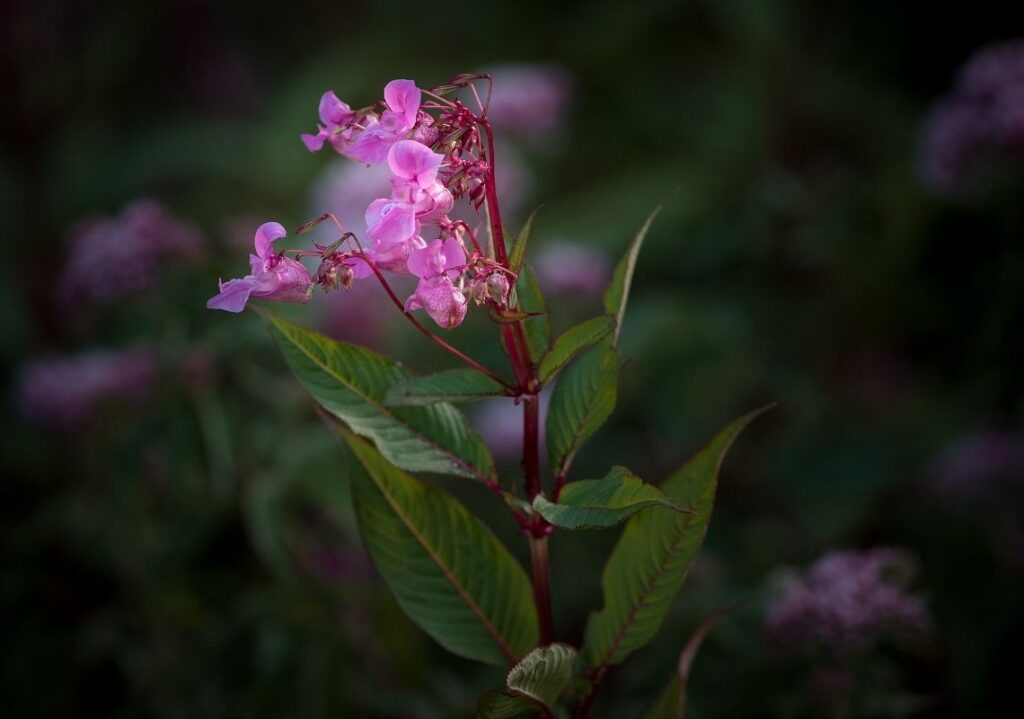
Himalayan Balsam (Impatiens glandulifera)
History & Spread:
Introduced for its showy flowers, it now dominates riparian zones and woodlands.
Growth Characteristics:
- Uses explosive seed pods to disperse seeds up to 7 metres.
- Each plant produces 800–2,500 seeds, enabling rapid colonisation.
- Dies back in winter, leaving bare soil prone to erosion and flooding.
Ecological Impact:
- Lacks natural predators in the UK.
- Outcompetes native flora by forming dense stands that reduce biodiversity.
Treatment Approach:
- Manual removal via hand pulling before flowering (May–June), ensuring roots are snapped above the lowest node.
- Cutting or strimming before seed pods develop below the first node.
- Annual repetition for 2-3 years is necessary.
- In areas with heavy infestation, glyphosate-based herbicide was also applied via foliar spray.
Progress and Outcomes
Area Treatment goals: 3 hectares were successfully treated across key sites in the Medlock Valley.
Techniques Used: Integrated management combining manual removal, mechanical cutting, and targeted herbicide application.
Monitoring and Maintenance: The sites will be revisited over several seasons to track regrowth and retreat as needed. Regular biodiversity assessments will evaluate the return of native species and overall habitat recovery.