Funding secured for major environmental project on the banks of the River Wear
Groundwork NE & Cumbria is delighted to announce that it has secured over £1/4 million funding for a major saltmarsh restoration project on both sides of the River Wear in the heart of Sunderland. The project will help tackle losses in our natural habitat, improve water quality and combat the effects of centuries of development on the river.
The Environment Agency, the Caterpillar Foundation and Groundwork NE & Cumbria have each pledged funds to support the initiative which will enhance and restore habitats and the natural flow of the river whilst helping to increase numbers of fish, crabs and other marine life, and boosting biodiversity in the River Wear.
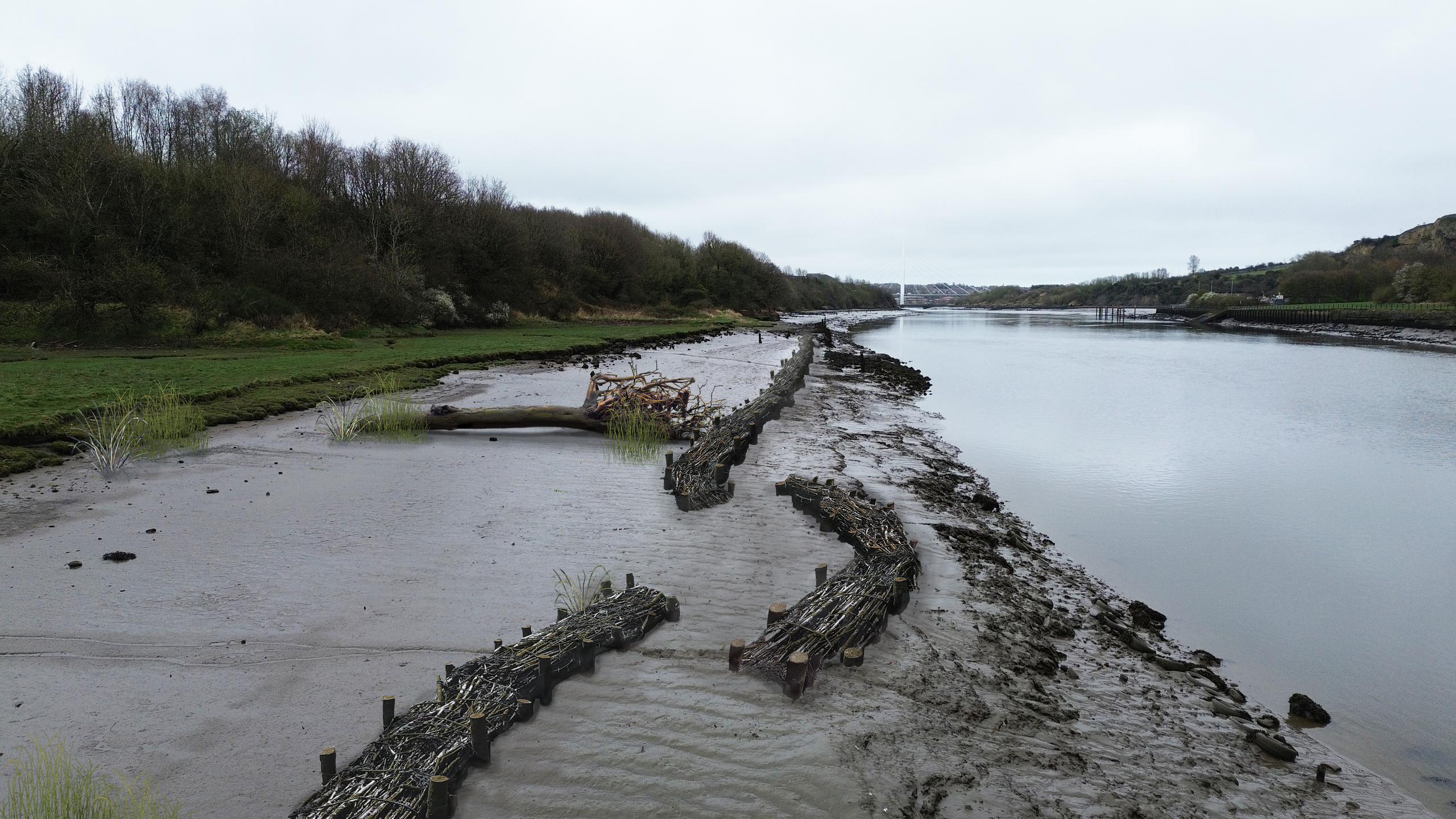
Approximately 0.7 hectares of estuary edge, (roughly the size of the pitch at the Stadium of Light) located at Baron’s Quay on the river’s North Bank and Claxheugh Rocks on the south bank of the river, will be the focus of efforts to restore mudflat and saltmarsh to the river.
The area was identified as a prime site for restoration after comprehensive mapping of the river by Groundwork NE & Cumbria and a team of environmental consultants from the University of Hull. Concept designs were developed by eco-engineering specialists, Cbec.
Saltmarshes are important ecosystems that are highly efficient at storing carbon naturally, deliver a host of biodiversity benefits and play a key role in addressing environmental change. Historically, the River Wear would have been lined with miles of mudflat and saltmarsh, but centuries of industrialisation and human interference have stripped it away, altering the flow and speed of the river and decimating marine life.
Restoring the mudflat and saltmarsh will bring back native plant species that provide nurseries and safe havens for juvenile fish and crabs, which are a great food source for larger fish, birds and mammals including Sunderland’s bottlenose dolphins!
Groundwork NE & Cumbria has appointed Swiftwater Solutions a local team of specialist contractors to carry out the restoration work which will start in March 2026.
The team will not be planting salt marsh species, instead they will build natural barriers from wooden stakes and woven brushwood. Positioning this installation at the right height in the mudflats will slow the river flow, remove sediment from the water allowing mud, sand and silt to build up burying the new structures. This will encourage natural re-seeding and colonisation of the site by native species already
found on the river. Eventually the new saltmarsh will become part of the riverbank providing homes for fish, crabs and other marine life.
These efforts are part of Groundwork NE & Cumbria’s Nature-based Solutions (NbS) approach to addressing environmental changes. The newly restored estuary habitats also act as a carbon sink storing carbon and providing habitat in areas affected by coastal squeeze. The work will also improve water quality and help restore the river to good ecological health a key driver behind the funding for this project.
Groundwork NE & Cumbria is calling for local community support to back the project. In the past, several trial projects on saltmarsh restoration in other part of the North East have been hampered by anti-social behaviour.
Hellen Hornby, Nature-based Solutions lead at Groundwork NE & Cumbria said; “We are extremely grateful for the support towards from our funders the Environment Agency and the Caterpillar Foundation in supporting our programme ‘Revitalising our Estuaries’ and specifically with this project. This is our largest saltmarsh restoration project in the region. Previous smaller trials elsewhere in the North East have been hampered by anti-social behaviour. To avoid this happening in Sunderland, we want to liaise with any interested parties, community groups and users of the river and estuaries to explain what we are doing and what we hope to achieve. By explaining the benefits for all river users and how the work will improve the river by bolstering fish and crustacean stocks, we hope will encourage people to protect our work on the mud flats.
“This project has been a long time coming. We have spent the last three years seeking the necessary planning approvals and demonstrating our Biodiversity Net Gain for these unique habitats. Now the permissions have been granted and we have the funding in place we are excited to finally start the project.”
Rebecca O’Connell, Environment Programme Team Leader for the Environment Agency in the North East, said: “In England, we have lost a significant amount of habitats, and with the loss of habitat comes the loss of valuable benefits and ecosystems.
“Restoring these precious estuarine and coastal ecosystems will enhance our connection to the natural world, help tackle the impacts of biodiversity loss, provide sustainable food, and improve the health and well-being of our communities.
“We are delighted to be working with Groundwork NE & Cumbria on this project in Sunderland and look forward to seeing the positive impact of the work.”
“Restoring saltmarsh along the River Wear is a powerful example of how Nature-based Solutions can address the intertwined challenges to natural infrastructure and biodiversity loss,” said Asha Varghese, president, the Caterpillar Foundation. “The Foundation is proud to support this project, which will help capture carbon, restore critical habitats, and strengthen the natural systems that communities depend on. We’re pleased to work alongside Groundwork NE & Cumbria and the Environment Agency to deliver lasting environmental impact in Sunderland.”
