
Nature Connectedness

The topic of Nature connectedness raises many questions: why is connecting with nature important, what can we class as ‘nature connectedness’, and how do we begin to value the environment around us?
Over the course of my placement at Groundwork North East and Cumbria, working primarily on the River Esk Connect (REConnect) project, I have seen first-hand how connection with and around nature can deepen the impact of community development, and can enrich the lives of all individuals – whether that be a five year old or someone who has just turned ninety, somebody who has lived by nature their whole life, or those having their first ever experience of nature after busy life in a big city.
In fact, over the course of my placement I have witnessed that those who have lived by nature (like myself!) are often those least likely to engage with it, at least in the way we are trying to present connection within the REConnect project. Perhaps constant exposure to natural surroundings fosters a sense of novelty fatigue, or even a kind of “nature blindness” ( 6 ), particularly among those outside the environmental sector. Living in these areas can create a lifestyle of rushing through natural spaces without pausing to observe, reflect, and appreciate them – much as city residents might rush past urban parks without noticing them.
Many other factors can limit people’s engagement with the outdoors: time constraints, lack of physical accessibility, feeling intimidated by not knowing plant names, or simply not knowing where to start.
This makes it all the more urgent to foster meaningful connections with the natural world. We must find simple, accessible ways to connect everyone to their local environment – preserving rivers, building respect between communities and their surroundings, and ultimately improving quality of life, personal development, and mental and physical health.
So what exactly is nature connectedness?
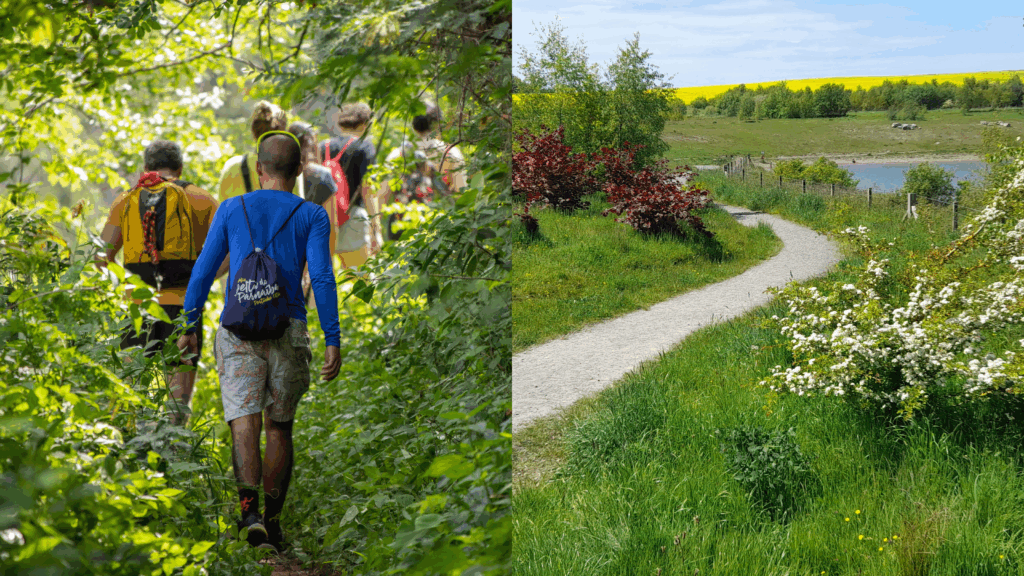
Nature connectedness is defined as ‘an individual’s subjective sense of their relationship with the natural world, encompassing emotional affinity (feeling of closeness) and inclusion of nature in one’s self identity’. The concept emphasises how nature influences feelings and well-being, highlighting the importance of emotional connections to the environment. ( 1 ,2 , 3 )
Research acknowledges that while there are many studies involving walking in nature, there has been little exploration of the impact of sitting with nature, and experimental studies of arts-based engagement with nature are also needed, suggesting that different forms of engagement (beyond just proximity) are important for meaningful connection. Studies also show that key differences exist between urban and rural populations in how they connect with nature, as well as that familiarity affects emotional responses to nature. ( 4)
REConnect and my experience of nature connectedness.
At REConnect (a five-year partnership project funded by the National Lottery Communities Fund), our key goal is to ‘reconnect’ people to the beauty of the River Esk and its surrounding landscape, creating a deeper bond with nature by bringing together experts in climate, ecology and community action and working with local communities. ( 5 ) We are running a number of free of charge community engagement events, which focus on establishing these connections and work toward encouraging people to meaningfully connect with nature at home and in their daily lives.
Since starting my internship with Groundwork, I have attended several of these engagement events and had the incredible opportunity to start developing my own connections with and to the nature around me. I have found myself questioning my current connections, and had to accept the many humble occasions where I have forgotten about or felt disconnected from nature, despite being an avid advocate for it, and despite it sitting on my doorstep.
After working with nature through both craft events, tree identification and monitoring activities, I have begun to understand that nature connectedness is not just about witnessing nature, but taking extra steps to really engage, communicate with and understand it.
My first activity was creating ‘nature books’ – using natural materials to create identification booklets and artwork of natural places. This was part of our engagement event at Malton library, and many children and parents attended – all of which seemed to thoroughly enjoy the activity. I must admit though that I believe I enjoyed it the most! Experimenting with the different shapes, textures and colours available in different natural materials and crafting animals and plants allowed me to not only connect with physical nature, but also with my child-like nature; with the little girl who enjoyed sticking her hands in dirty, sloppy mud and collecting woodlice in shoeboxes. I left feeling relaxed, grounded and with a new appreciation for the different leaves of the many tree species that surround the catchment.
I also took part in a ‘jelly print’ activity at our Whitby event, where we used jelly moulds to print leaf and nature shapes onto paper with acrylics. This was accompanied by a nature walk around Pannett Park, used to collect our dry materials, where it was nice to learn more about tree species and have a go using my new-found tree identifying skills with the children and their parents. A comment was made during this that really stuck with me. Rhian, one of my colleagues, said “we should all act like kids sometimes“, and it is true! Creation should really be routine, especially considering that engaging in nature-connectedness has been shown to be associated with greater feelings of autonomy, personal growth, and purpose in life; lower levels of anxiety, depression and stress; and increased attention span and cognitive functioning.
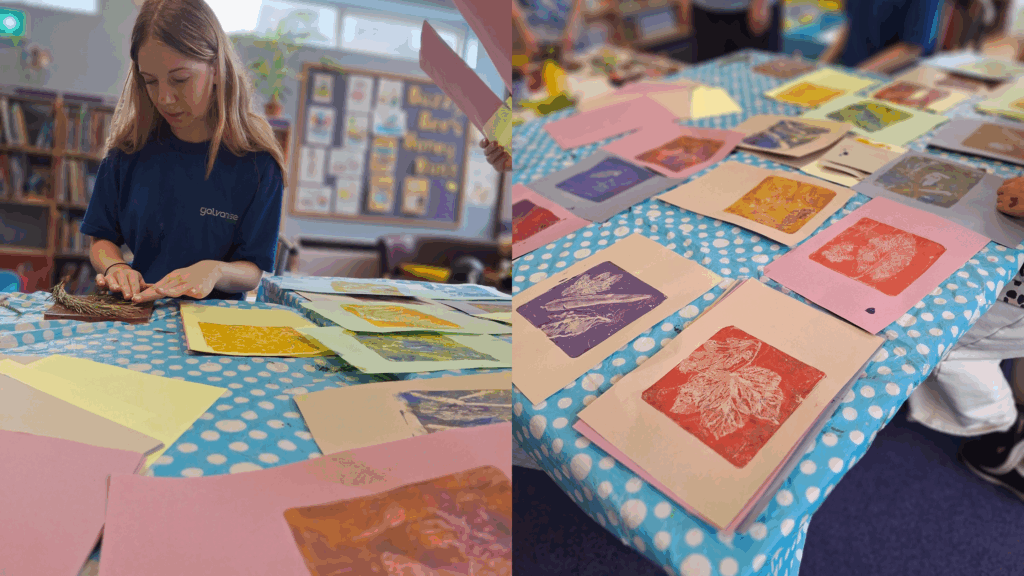
Connection with nature can bring greater balance to our emotion regulation system and can contribute to fostering two different dimensions of happiness, both joy and calm.
Importantly, the stronger a person’s connection to nature, the more likely they are to spend time in nature, and experience more of the benefits of exposure to it. (3 )
An earlier nature connectedness activity which I had taken part in – drawing and identifying tree leaves – allowed me to have a more individual experience and look more at my personal connections. I tried a variety of techniques, and used pencils, crayons and paper to attempt a few different approaches. A nice way of connecting was by placing a fallen tree leaf under paper and ‘rubbing’ the paper with a crayon to print the texture of the leaf onto the page. This created a more realistic effect, allowing me to see the intricacies of each leaf and think about the systems within it. I also freehanded a few leaves, in both colour and monochrome , and used the internet to search for any other identifying features (such as tree bark pattern, seed pods, flowers and berries) to add these to my image. You have to consider the changing seasons, and how this will alter the ways in which you can identify each tree. For example, the leaves will fall in autumn, flowers may only bloom in summer, and twigs will be the only thing visible in winter. Tree identification guides helped in aiding my decisions. I used a children’s guide (These ones specifically ) as I am still getting to grips with tree species so feel a need to understand the basics first, although the National History Museum also has a good option if you are slightly more advanced. This activity left me feeling calm, and I returned to my work in the afternoon with a balanced attitude, and – once again – more appreciation for the nature around me.
Connectedness in cities
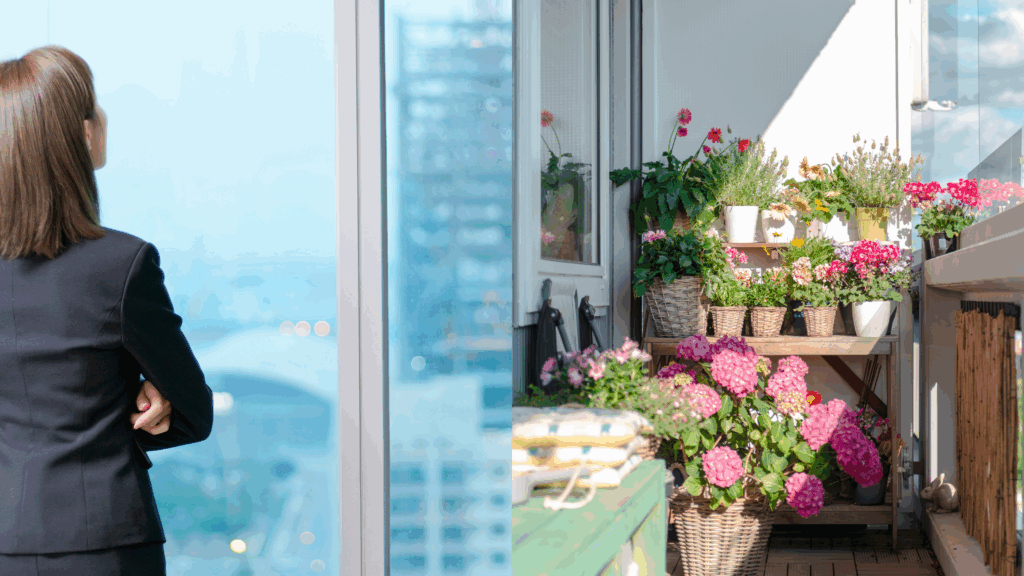
While the REConnect project focuses on the River Esk catchment, the principles of nature connectedness apply just as strongly in towns and cities. In fact, research suggests that even small-scale nature experiences such as tending a balcony garden, pausing to watch the clouds from an office window, or noticing the changing leaves on a single street tree, can deliver many of the same wellbeing benefits as time spent in wilder landscapes. Urban green spaces, from community parks to canal paths, can be powerful sites for building connections to the natural world. Even window boxes or houseplants can act as micro-habitats for pollinators and as a daily reminder of our connection to living systems.
The key is to approach these moments with the same sense of attention and appreciation as you would in a woodland or riverside. Taking five minutes to notice the little things that you may not always experience in your day-to-day life (shadows, patterns on leaves, sound of birds, ripples of water). The scale may be smaller, but the connection is no less meaningful, and for many city dwellers, it may be their most regular and accessible gateway to the benefits of nature. This article by the IUCN on nature connectedness in cities takes an interesting approach: Embracing biodiversity: Paving the way for nature-inclusive cities – Story | IUCN
Interestingly, research by the University of Derby suggests that heritage connectedness can similarly amplify the benefits of heritage engagement, and that heritage is similar to nature, (and social!) connectedness not only in this way, but also in the way that people can relate to heritage in ways that parallel relations with nature and people ( 1). After all, nature and heritage impact each other, as do people. Though further research is needed, the university’s research reports present an interesting approach. I would recommend that you take a look at it, and ponder on a figure that is particularly appealing, aiming to highlight a ‘connectedness space’ between people, nature and their shared past. Also, please have a look at the ‘Encounter’ app which they discuss. It is a free, guided nature journal from nature writer Melisa Harrison, that will open your eyes to your nearby wild, no matter where you live, and help you notice and deepen connections to nature. The app offers seasonal prompts, tips and ideas tailored to your location within Britain or Ireland, plus expert content for those who want to learn more. You can also log any species that you have found. . ( 4 , 7)
My placement with Groundwork has given me the platform to not only speak about the importance of connecting with nature, but to connect with it myself. I am incredibly grateful for all the opportunities I have been provided with and I cannot wait to see the progress and future events/opportunities that REConnect will generate.

When we start to nurture connections to our natural world, you truly see the benefits of not only the environment, but to yourself and to others. Nature connectedness has left me feeling grateful, peaceful and happy, and it can do the same for you, too.
You can find out more about the project, its opportunities, and what exactly we are doing to connect people with nature via our facebook page: River Esk Connect – REConnect, or by visiting the North York Moors website. For ideas about what you can do at home to REConnect with nature, our website also has various inspiration pages and posts. Our inbox is always open if you are interested in engaging in nature connectedness activities and would like us to host something in your club, community group or education establishment. You can get in touch via reconnect@northyorkmoors.org.uk
Bibliography
1 Nature connectedness – Wikipedia
2 Nature Connectedness – what is it and how can it help? – Make it Wild
3 What is Nature Connection? — Forest Healing
4 Nature Connectedness Research Group – Zero Carbon Nature-Based Solutions Research Centre – University of Derby
5 REConnect – Groundwork
6 Why ‘plant blindness’ matters — and what you can do about it – BBC Future
7 Encounter
8 Embracing biodiversity: Paving the way for nature-inclusive cities – Story | IUCN