
Transforming a Hospital Courtyard in Stockport into a Therapeutic Garden
At Stepping Hill Hospital in Stockport, a small, enclosed courtyard sat unused offering little more than an uninspiring view for patients on the Acute Frailty Unit (AFU) and the adjacent Acute Medical Admissions Unit.
The Vision
The idea to transform this underutilised space came from Jan, a Clinical Lead Physiotherapist at Stepping Hill Hospital. Jan and her team recognised the absence of a dedicated social or therapeutic garden within the AFU. Their patients, many of whom are living with dementia or delirium, often report feelings of isolation and frustration, particularly those staying in side rooms with limited views.
Jan saw the courtyard’s potential as a therapeutic garden that would support cognitive and physical rehabilitation, improve well-being, and provide an area for structured therapeutic activities.
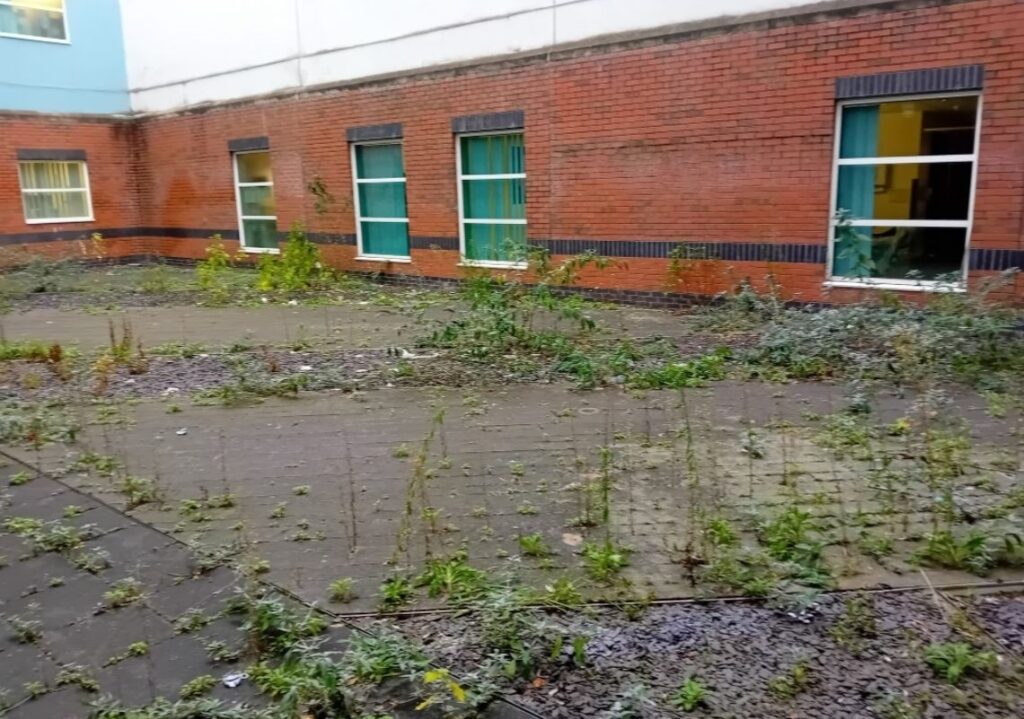
Therapeutic gardens have been shown to provide calming environments, reduce stress and agitation, and motivate patients to mobilise, which are key goals in preventing deconditioning and supporting recovery.
Jan, Clinical Lead Physiotherapist
Groundwork’s Involvement
Groundwork were approached by the hospital’s Associate Finance Director in August 2023 who had heard about our work at other hospitals. With a clear vision already forming within the hospital team, our Landscape Architect, Richard, worked closely with Jan and her colleagues to refine their ideas into a deliverable and costed design.
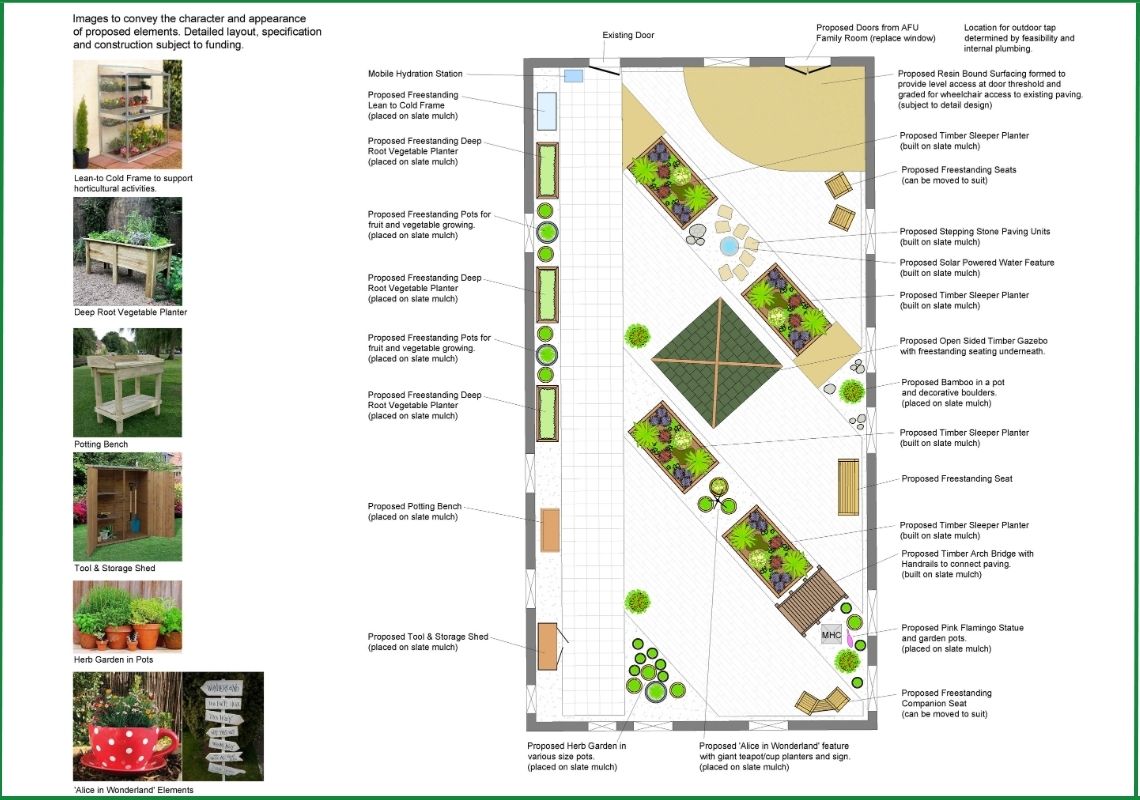
We were then able to support the team through their grant application to the NHS Charities Together Greener Communities Fund by:
- Developing a realistic, fully-costed landscape design based on the team’s vision.
- Providing an attractive concept sketch to bring the idea to life visually.
- Producing a promotional video to articulate the need, the concept, and the anticipated impact.
- Acting as the hospital’s community partner during the application process.
The on-site team remarked that this support was critical to the success of the bid, which £68,400 was awarded to the project in May 2024.
Design & Development
From November 2024 to January 2025, we progressed the project through detailed design, technical specifications, procurement and overall project management.
Key considerations during the design process included:
- Access Constraints: All materials had to be brought in through the hospital, limiting equipment use. The existing paving meant we could build on top without excavation.
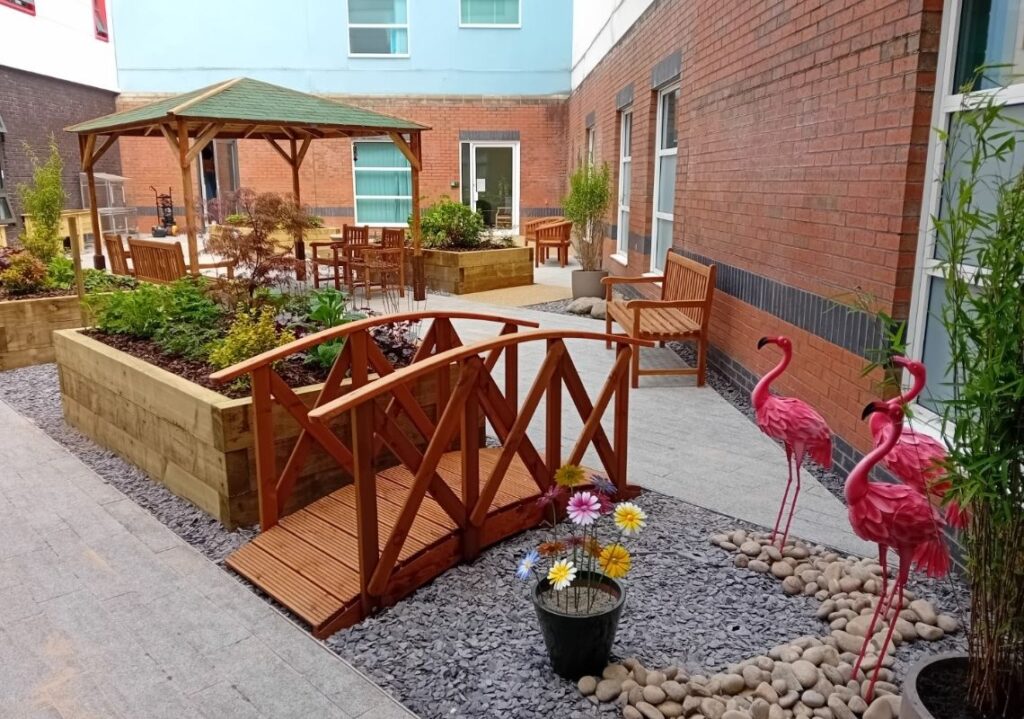
- Accessibility: A new doorway was created to allow easy wheelchair access. Additional paving and path design supported safe circulation.
- Planting & Biodiversity: Shaded and sunlit areas were planted with species suited to their conditions, chosen for sensory engagement, low maintenance, and year-round interest.
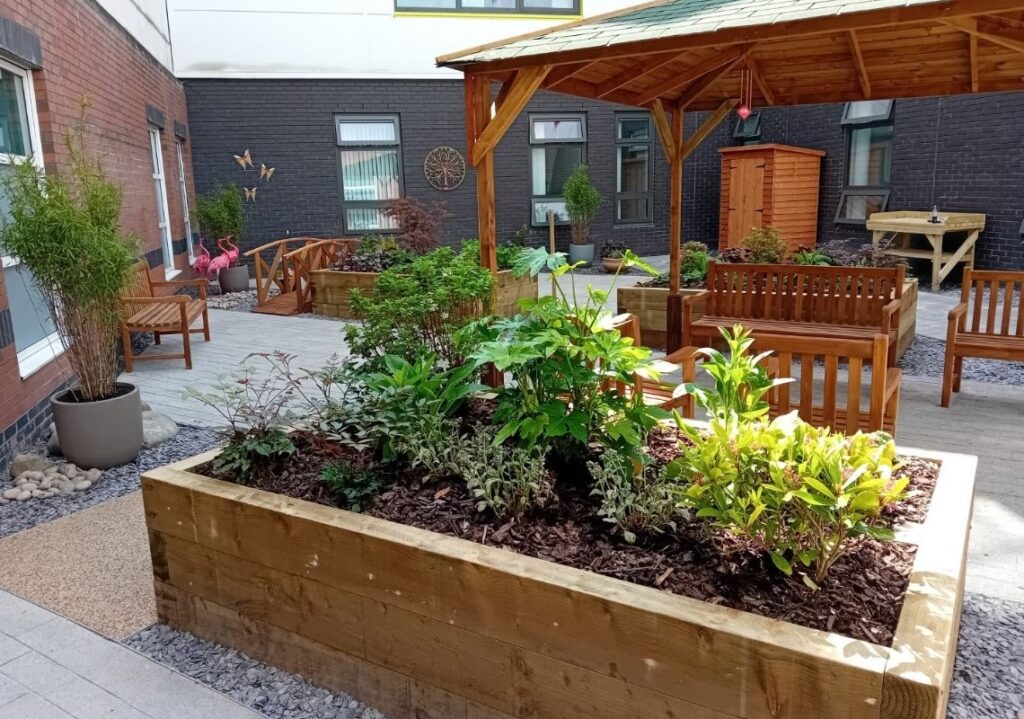
- Activity Zones: The space includes raised planters, a small greenhouse, a potting table, an outdoor tap, and storage, enabling ongoing patient gardening activities.
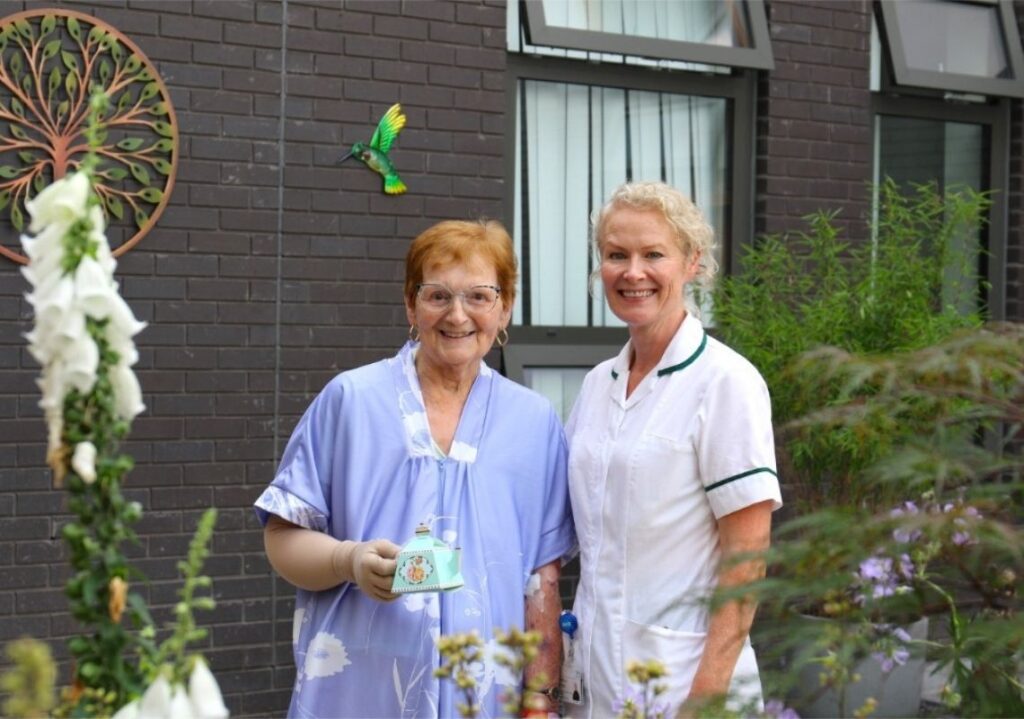
- Creative Themes: Staff contributed the idea of an Alice in Wonderland theme, and Richard worked to incorporate whimsical features like pink flamingos, a “mad hatter’s tea party” area, and decorative signage.
Construction & Launch
Construction was completed by PR England & Sons Ltd in April-May 2025 and was overseen by Richard to ensure the vision was realised on-site.
The therapeutic garden officially opened with a launch event on 18th June 2025, and immediately began delivering impact for patients and staff alike.
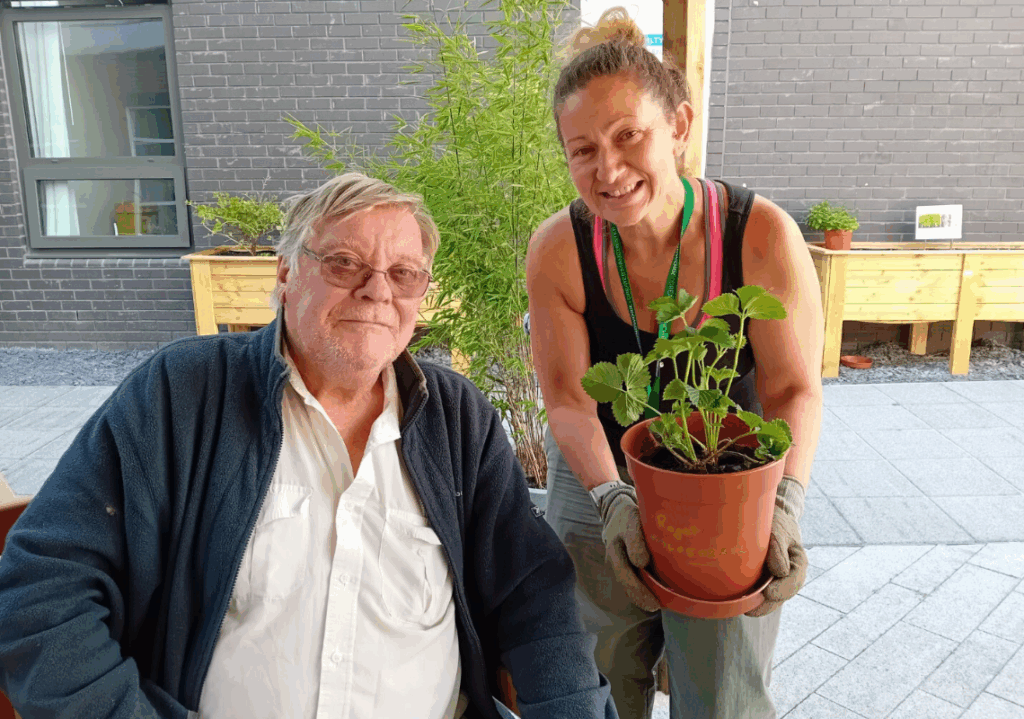
One patient, who had been in the ICU for almost a week commented during one of the gardening sessions: “This is the best afternoon I’ve had since I came into hospital”
Ongoing Engagement
We are now delivering a series of 12 garden engagement sessions with patients and staff through to May 2026, encouraging active use of the space and contributing to continuous therapeutic outcomes.
These sessions allow patients to plant, water, and care for crops like salad vegetables, herbs, and fruits, enhancing the sense of purpose and wellbeing during their stay.
This project was made possible thanks to funding from NHS Charities Together Greener Communities Fund