BLOG – Natural spaces as Live Well spaces: The role of Green Community Hubs
By Michaela Howell, Head of Communities & Neighbourhoods, Groundwork Greater Manchester
The Live Well movement is reshaping how Greater Manchester supports health and wellbeing. Its ambition is to focus more on prevention, by creating centres and spaces where people can find support, connection, and opportunity. At Groundwork Greater Manchester, we believe natural spaces are essential to this vision, and that Green Community Hubs show how they can transform lives.
Why natural spaces matter for Live Well
Natural spaces such as parks, gardens, woodlands, allotments, riversides do more than improve our environment; they support mental and physical health, encourage activity, reduce stress, and provide welcoming, stigma-free places to connect with others. In neighbourhoods facing high levels of inequality, they can be a lifeline, offering tranquillity, calm, and opportunity where it is most needed.
Making natural spaces central to the Live Well agenda means recognising that prevention often happens outdoors; when people join a gardening group, attend a walking club, volunteer in conservation, or simply meet their neighbours in a shared green space.
Green Community Hubs: natural spaces in action
Green Community Hubs take this principle further. They are focal points for a programme of activity designed by local residents. They are especially powerful in under-resourced areas, where people face multiple socio-economic and health challenges, and where access to safe, quality green space can be limited.
Green Community Hubs bring the Live Well model to life by delivering:
- Improved relationships within the community – reducing isolation and strengthening trust.
- Improved access to nature – turning overlooked land into safe, welcoming, and vibrant spaces.
- Better mental and physical health – via green social prescribing, growing projects, and outdoor activity.
- Pathways out of poverty – by linking people to energy saving advice, skills training, and employment support.
A story from Brinnington, Stockport
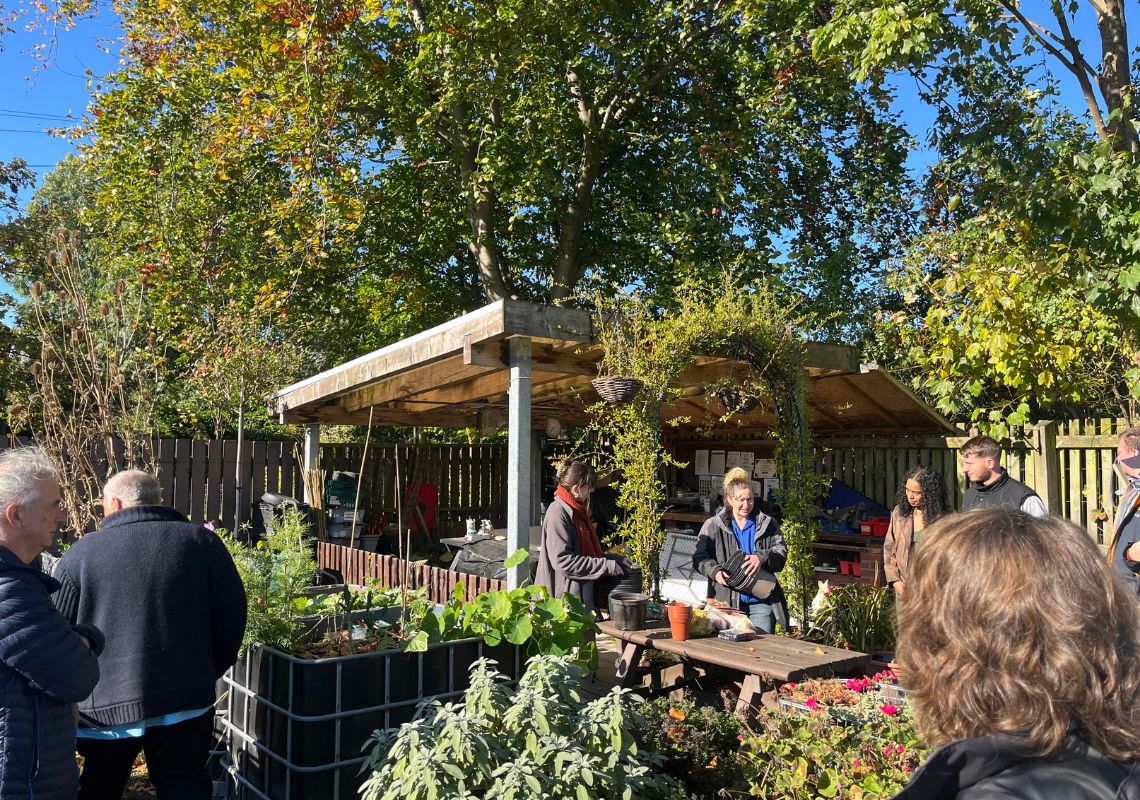
In Brinnington, the community hub garden has become a meeting place, a classroom, and a sanctuary. Local residents who once felt isolated now meet weekly to grow vegetables together, share food, and learn new skills. One participant described it as “the first place I felt truly welcome after moving here.”
Alongside gardening, the hub offers energy advice for people with long-term health conditions, one-to-one employment support, and women’s groups. But the garden is the heartbeat of the hub: a place where conversations happen naturally, where trust is built, and where health and wellbeing are supported without walls or waiting rooms.
This is what a Live Well space looks like when rooted in nature.
Looking to the future
We believe the next stage of Live Well should be to fully embrace natural spaces as integral Live Well spaces; valued not as “extras” but as essential community infrastructure. Green community hubs show the potential of this approach: places where prevention and opportunity come together.
Our ask of decision-makers is to:
- Recognise Green Community Hubs as part of the core Live Well offer, not just as add-ons.
- Invest in natural spaces as neighbourhood infrastructure, on the same footing as buildings and services.
- Back long-term partnerships that allow communities, VCFSE organisations, and statutory services to grow and sustain this approach together.
Our ambition
Groundwork Greater Manchester’s ambition is to help realise this future. We want to see natural spaces, and especially green community hubs, embedded across Greater Manchester’s Live Well network.
We will continue to co-design hubs with communities, deliver green social prescribing and build the skills and opportunities that help people move out of poverty. By doing so, we’ll demonstrate that health is not only improved in clinics or centres, but in the everyday green places where people meet, learn, and grow.
Michaela Howell
Head of Communities & Neighbourhoods