
The Wild Oysters Project: Tyne & Wear
‘The Wild Oysters Project: Tyne & Wear’ is a project delivered in partnership between Groundwork North East & Cumbria and the Zoological Society of London. Together, since 2020, we have been working to restore self-sustaining populations of the European native oyster to the North East England Coast.
Why are oysters important?
Native oysters deliver vital ecosystem services. As filter feeders, they enhance water quality by improving clarity and removing excess nutrients. They naturally form complex 3D reefs that support rich biodiversity, providing shelter, habitat, and feeding grounds for a variety of marine creatures. This includes important commercial species, such as fish, crabs, and lobsters, in turn benefiting coastal communities which rely on these stocks. Oyster reefs can also act as natural breakwaters, reducing wave energy and potentially offering a cost-effective, nature-based solution for coastal protection.
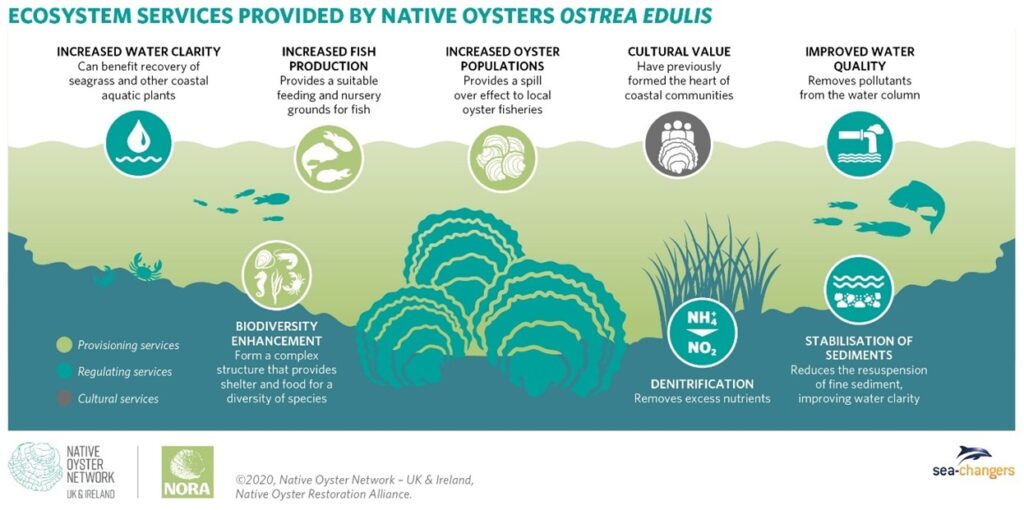
© Native Oyster Restoration Alliance
Why do they need our help?
Native oysters were once abundant in UK waters but have declined by 95% across Europe since the 1800s. Today, they are locally and functionally extinct across much of their range due to pollution, invasive species, habitat loss, and historic over-harvesting. North Sea oyster fisheries declined in the early 20th century as catches fell, yet exploitation continued until the 1950s, when stocks ultimately collapsed. In Tyne & Wear, oysters have been considered locally extinct for decades.
The scale of decline across Europe is so severe that active human intervention is now essential to prevent functional extinction and support recovery. Restoration efforts typically involve protecting remaining populations, introducing broodstock oysters to repopulate depleted areas, and actively restoring both the species and the seabed habitats they create.
History of oysters in Tyne & Wear:
Historical records show oysters in Northumbria during Medieval times, sourced from Lindisfarne. In 1381, oysters were moved from the Firth of Forth to Holy Island, and by 1860, oyster beds were recorded there. A map in the Piscatorial Atlas from 1883 depicts the known distribution of native oysters in the North Sea, showing a band of oysters all along the Northeast England coastline, meaning they were both present and harvested at that time. References from the late 19th and early 20th centuries mention harvesting and cultivation in the Tyne-to-Tees area, including a “Tyne Bay Oyster Bed” noted in The Newcastle Journal (1916).
Oysters were deeply rooted in local culture. In the 1860s, Tynemouth had an oyster saloon, and South Shields hosted a fish mart specializing in oysters. Newcastle’s “Oystershell Road” takes its name from Oystershell Hall, a building clad entirely in oyster shells. Geordie folk songs, such as The Oyster-Wife’s Petition, also reference oysters. Archaeological digs across the region, including Roman sites in South Shields, further highlight their long-standing cultural and ecological significance.
Wild Oysters Project Activities:
Our project delivers three key activities:
- Oyster nurseries: Creating larval release sites
- Oyster reef habitat restoration
- Education, public engagement & citizen science
Oyster nurseries: Creating larval release sites
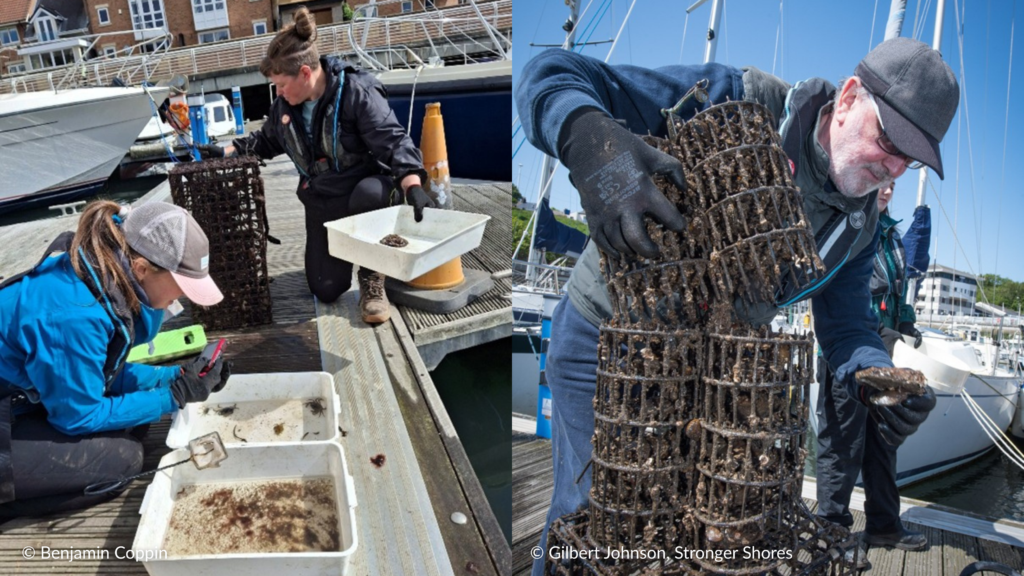
Due to native oysters being locally extinct, a supply of oyster larvae (baby oysters) into the area is required to seed coastal waters. To supply this, we operate an oyster nursery at Sunderland Marina with 30 purpose-built cages housing over 800 broodstock oysters. Each summer, during the spawning season, over 1 million larvae are released per oyster, adding hundreds of millions of young oysters into coastal waters annually.
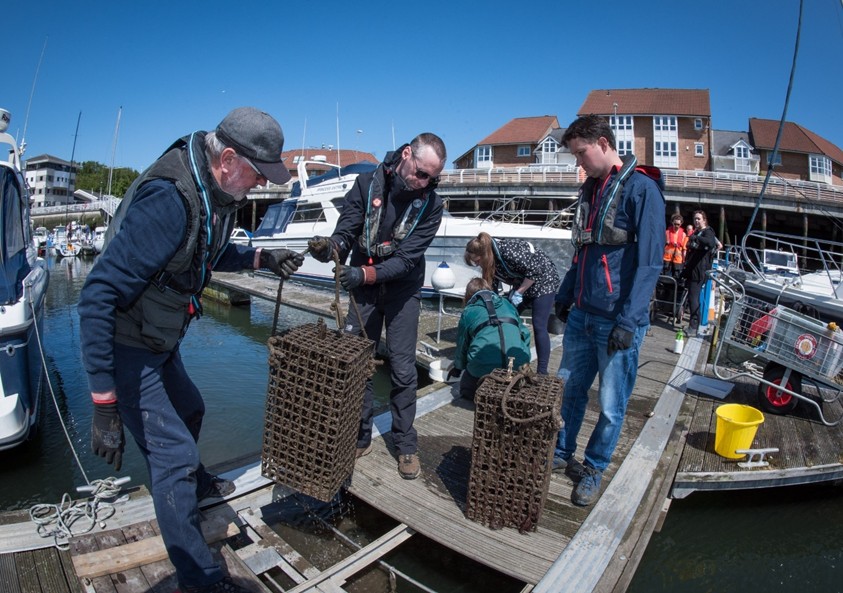
© Gilbert Johnson, Stronger Shores
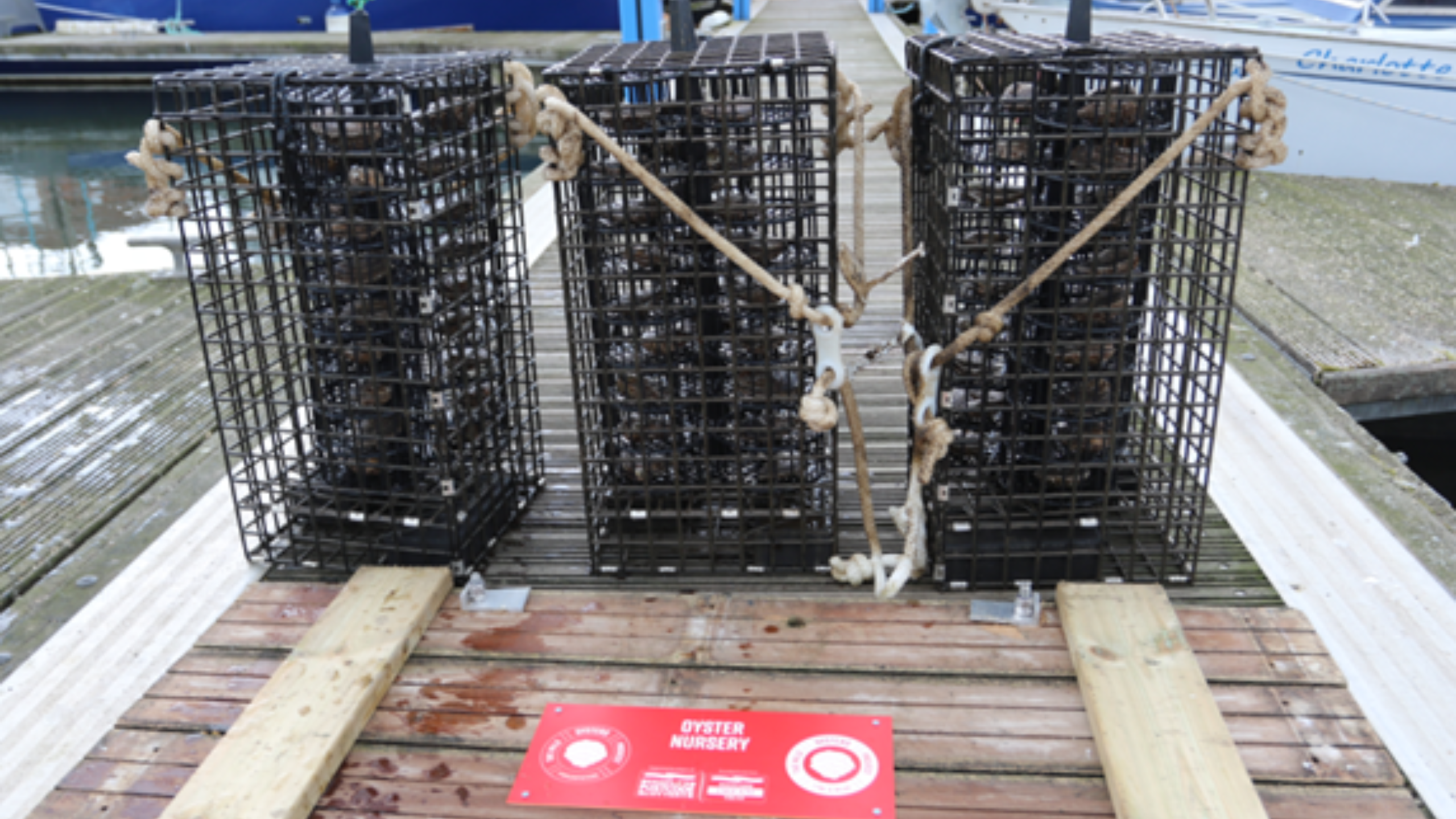
© People’s Postcode Lottery Press Team
Oyster reef habitat restoration:
Due to limited suitable seabed habitat in the region for oyster reefs to thrive, habitat creation is needed to help oysters recover locally.
In 2023, we created our first oyster reef habitat on the exposed North Sea coast, piloting a method previously used only in sheltered waters. 750 tonnes of ‘cultch’ (gravel and recycled scallop shells) was added to the seabed to improve the conditions for oyster settlement and survival. We then introduced 10,000 adult oysters from Scottish populations, establishing the first oyster reef in the North East in over 200 years.
Unprecedented storms soon after deployment caused some of the reef material to move a short distance inshore, but ongoing monitoring has shown oyster survival and establishment in the area 2 years on.

© Wild Oysters Project
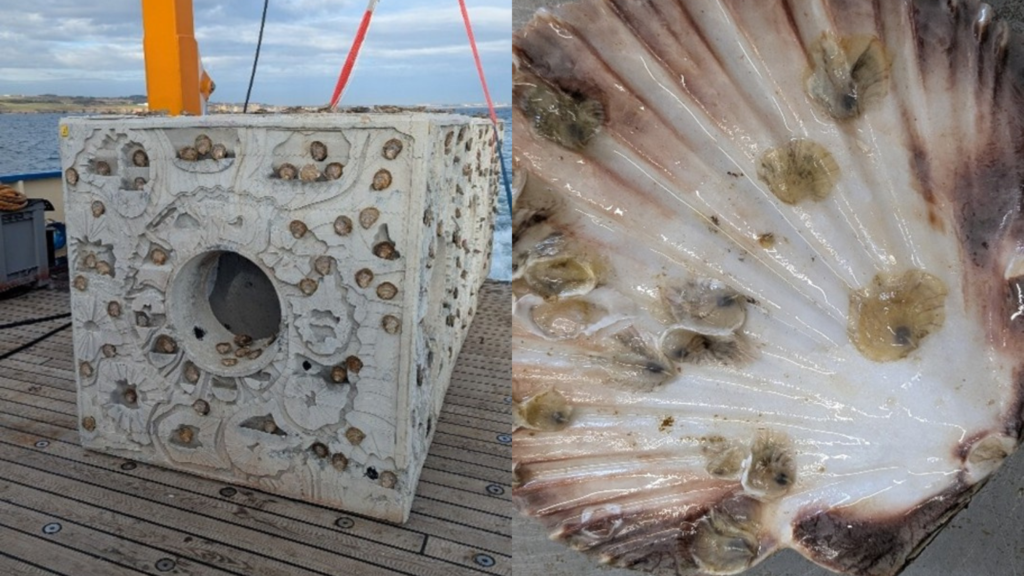
In 2025, we adopted a new multi-method approach tailored for exposed coastal environments. We deployed large 6-tonne oyster reef cubes to create stable oyster habitat and improve resilience against storms. Around these, we scattered 40 tonnes of scallop shell cultch to expand suitable substrate. Additionally, we introduced 4,000 mature native oysters attached to the reef cubes and over 60,000 ‘spat-on-shell’ (juvenile oysters pre-seeded on scallop shells).

© Wild Oysters Project
© Ashleigh Tinlin-Mackenzie
Education, public engagement & citizen science:
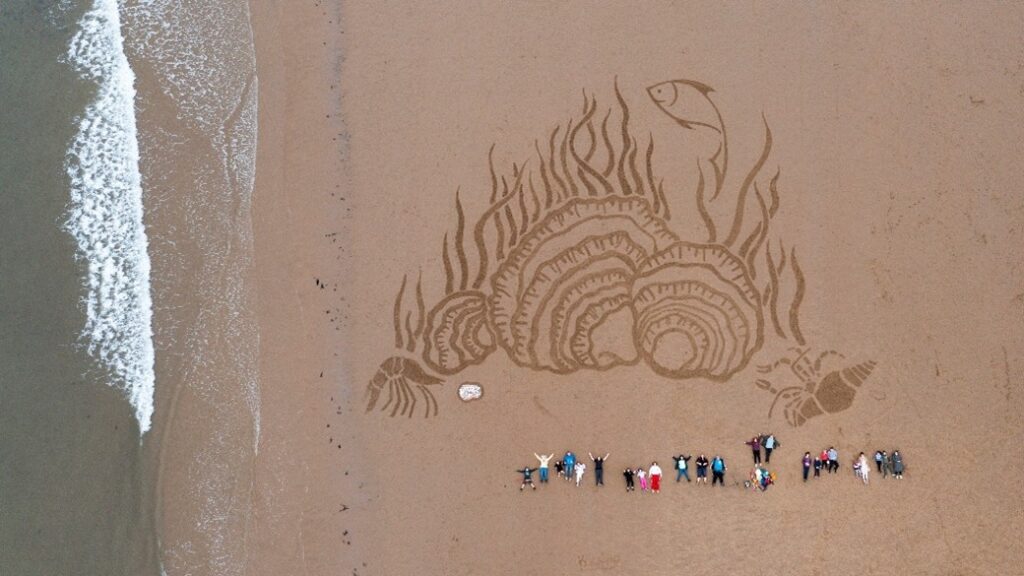
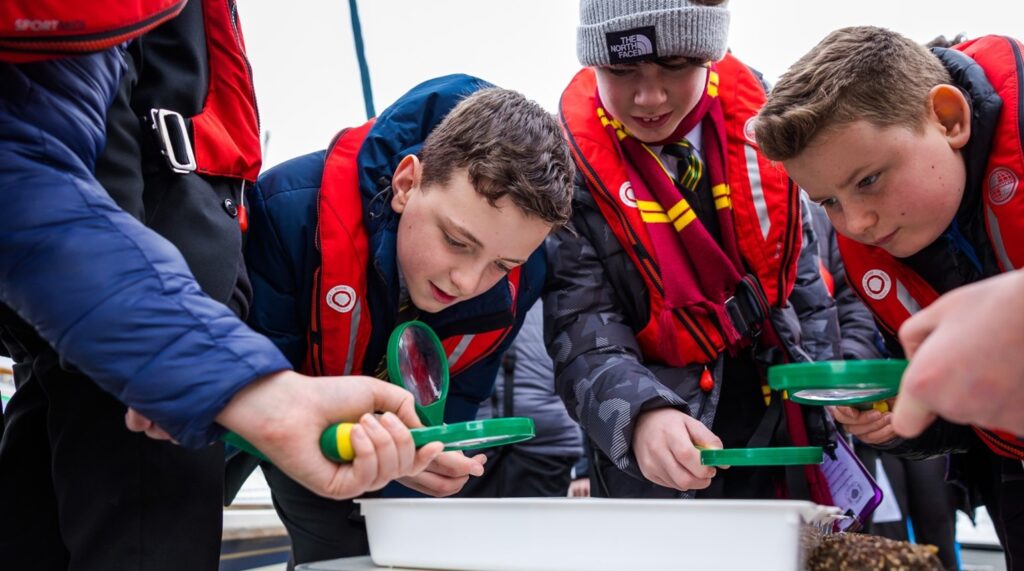
Public engagement is central to the Wild Oysters Project, reconnecting coastal communities with the sea and native oysters as a lost part of local heritage, while inspiring future marine stewards. Our outreach programme is anchored at Sunderland Marina’s oyster nurseries, where we host volunteer sessions for monthly oyster health and biodiversity surveys, alongside similar events for corporate and interest groups. We also deliver classroom sessions in local schools and welcome student groups to the marina for hands-on restoration experiences, offering a real glimpse into marine conservation work. Through these activities, we aim to spark action, awareness, and a renewed love for the iconic native oyster.
© Soul to Sand
If you, or someone you know would like to be involved in one of our monitoring sessions, or organise a bespoke session, please email wild.oysters@zsl.org for more details.
© Sunderland Council
Underwater reef ‘the size of a football pitch’ becomes home to 10,000 native oysters – in bid to restore the threatened species & support marine life
A newly created reef, the size of a football pitch became home to 10,000 European native oysters today (2 October) – marking a landmark moment in the restoration of the native species to UK shores.
The hard-working molluscs – which will also help to create healthy and resilient coastal waters – were laid by conservationists from the Wild Oysters Project onto a newly built 7,500sqm living reef in North East England, following years of planning to restore the species.
Funding:
The Wild Oysters Project: Tyne & Wear is currently funded by the Stronger Shores Partnership and led by South Tyneside Council, with funding from DEFRA as part of the £200 million Flood and Coastal Innovation Programmes (FCIP) which is managed by the Environment Agency. The programmes will drive innovation in flood and coastal resilience and adaptation to a changing climate, namely the restoration of kelp forests, seagrass meadows, and oyster reefs in the Northeast of England.
We are actively seeking continuation funding for the Wild Oysters Project from 2027, to allow us to upscale and continue to deliver active oyster restoration in the region.
Adopt an Oyster
As part of the Wild Oyster Project, over 4,000 crocheted oysters are being lovingly handmade by volunteers across the region. Each one is unique, different colours, patterns, and personalities, just like the real oysters we’re restoring to the North Sea. Looking to adopt? Click the link below!
Crochet an Oyster
Would you like to join our team of volunteers. You can make as many as you like and have fun with different sizes, colours, and styles – there’s no set pattern, so every oyster is unique. Find out more information from the link below.
